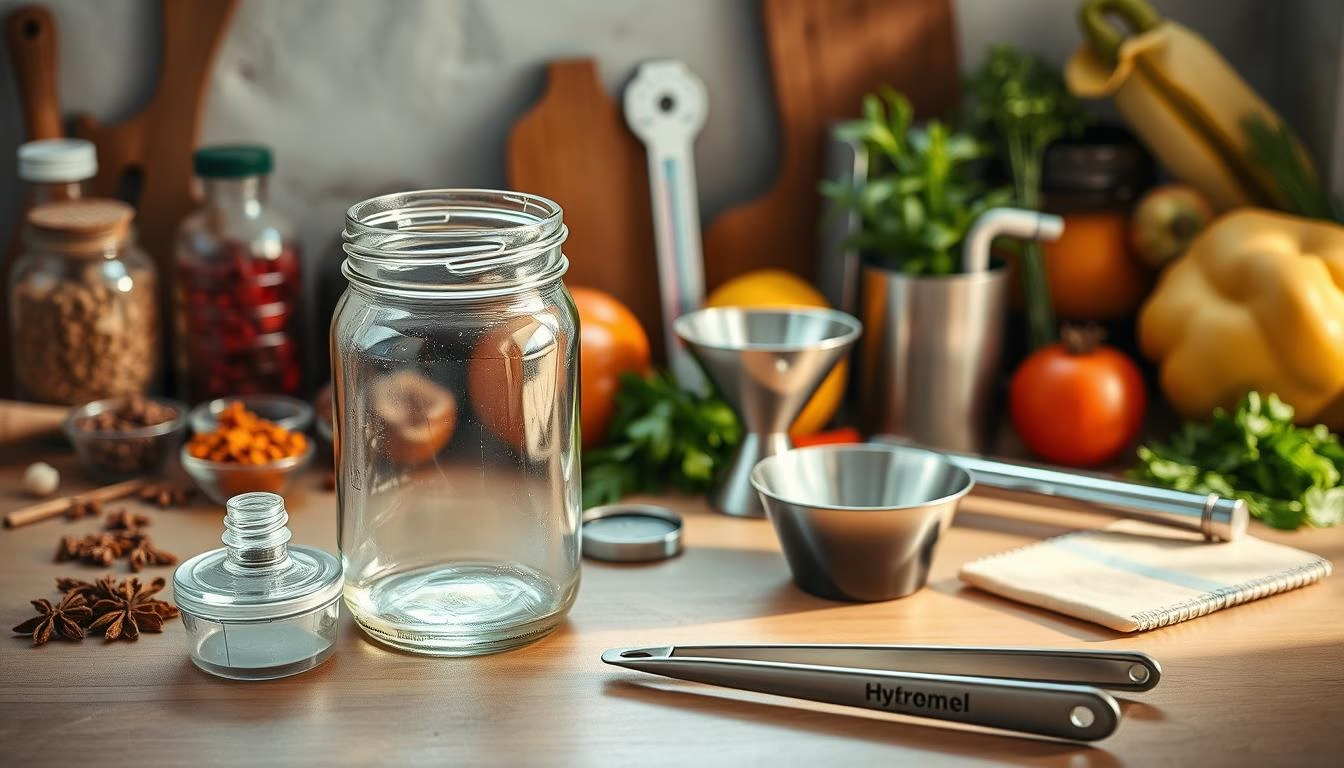
There was a time I nervously opened my first fermenter—hoping for flavor, fearing off-notes. You probably know that mix of excitement and doubt. This guide meets that feeling with clear, practical steps so you can turn curiosity into consistent results.
Think of brewing as a process you can control. Clean gear, healthy yeast, proper aeration, steady fermentation temperature, and thoughtful conditioning are the levers that move a batch from “good” to “wow.” We’ll give you the essential information and a simple checklist to follow on your next brew day.
You’ll learn why water chemistry and fermentation temperature matter, how to avoid common mistakes, and where to spend effort first for the biggest flavor gains. Expect straightforward explanations—just enough science to help you decide with confidence.
Key Takeaways
- Master cleaning and sanitation to prevent off-flavors.
- Prioritize yeast health—rehydrate or build a starter when needed.
- Control fermentation temperature; ales often excel around 65–70°F.
- Let the brew condition long enough—around two weeks in fermenter helps off-flavors fade.
- Start with RO or distilled water and adjust minerals for best results.
Understand the Process: Research-First Brewing for Better Results
Start with facts: trusted guides and proven recipes shorten the learning curve and save ingredients. Good sources keep you from picking up bad habits that are hard to unlearn.
Start with reviewed sources and proven recipes
Use technical books and respected magazines so your information is accurate. Solid, tested recipes from experienced brewers—like the ones in Jamil Zainasheff’s Brewing Classic Styles—give you reliable baselines before you tweak.
Leverage your local homebrew shop for advice and purchases
Your local shop is more than a retailer. Staff see patterns across homebrewers and can recommend fresh ingredients, gear, and troubleshooting advice.
- Begin with reviewed sources—avoid forum myths.
- Choose proven recipes to reduce variables.
- Ask questions at the shop and compare notes.
- Research timelines so you don’t rush fermentation or conditioning.
Choose Quality Ingredients and Store Them Right
Good flavor begins at the pantry: choose fresh grains, hops, and viable yeast before you brew.
Fresh inputs drive predictable results. Start with sealed bags and recent packaging dates. Fresh malt gives clean malt character. Old, oxidized grain often tastes flat or cardboard-like.
Store hops in the freezer and yeast in the fridge to slow oxidation and preserve viability. Keep crushed grain sealed and use it quickly. Temperature abuse dulls aroma and can hurt fermentation.
Match ingredients to the style
Balance your water and salts to nudge perceived hoppiness or maltiness. Small adjustments in calcium, sulfate, and chloride help dial a recipe toward the style you want.
- Buy quantities you will use within a few months.
- Source from reputable suppliers or a local shop with fast turnover.
- Check yeast dates—healthy cells make fermentation predictable at home.
Quick comparison of storage practices
| Ingredient | Storage | Why it matters |
|---|---|---|
| Malt | Cool, dry, sealed | Prevents stale, cardboard notes |
| Hops | Freezer, vacuum if possible | Preserves volatile aromas |
| Yeast | Fridge, original pack | Maintains viability for clean fermentation |
| Water additives | Stored dry or sealed | Consistency for your target style |
Sanitation That Saves Batches: Clean, Sanitize, Repeat
Sanitation is the single best habit that stops small errors from turning into ruined batches. Make this part of your routine and you protect taste and time.
Use PBW (Powdered Brewery Wash) in warm water to soak kettles, tubing, and fermenters. Scrub with dedicated brushes, rinse, then apply a no‑rinse sanitizer like Star San or VWP before any cold-side work.
Cold-side vigilance
The cold side is where bacteria can sneak in. Anything that touches chilled wort or finished beer—fermenters, transfer lines, bottling wands, and bottles—must be sanitized.
“Poor sanitation can ruin hours of work by allowing bacteria to dominate.”
- Treat cleaning and sanitizing as two distinct steps: remove soil with PBW, then sanitize with Star San.
- Clean immediately after use, rinse, and sanitize right before contact.
- Follow contact times and proper dilution—more cleaner is not better.
- Keep brushes for tubing and small parts to prevent hidden biofilms.
| Item | Clean | Sanitize |
|---|---|---|
| Kettle | PBW soak & scrub | Rinse, no‑rinse sanitizer before transfer |
| Transfer tubing | PBW circulation | Star San flush prior to use |
| Fermenters & bottles | Scrub and rinse | Sanitize just before contact |
Final way to think about it: build habits. One missed step can cost a batch, so clean, then sanitize, every time.
Homemade beer tips for Yeast: Starters, Rehydration, and Backups
If you want fewer off-flavors and faster attenuation, focus on how you prep and pitch your yeast.
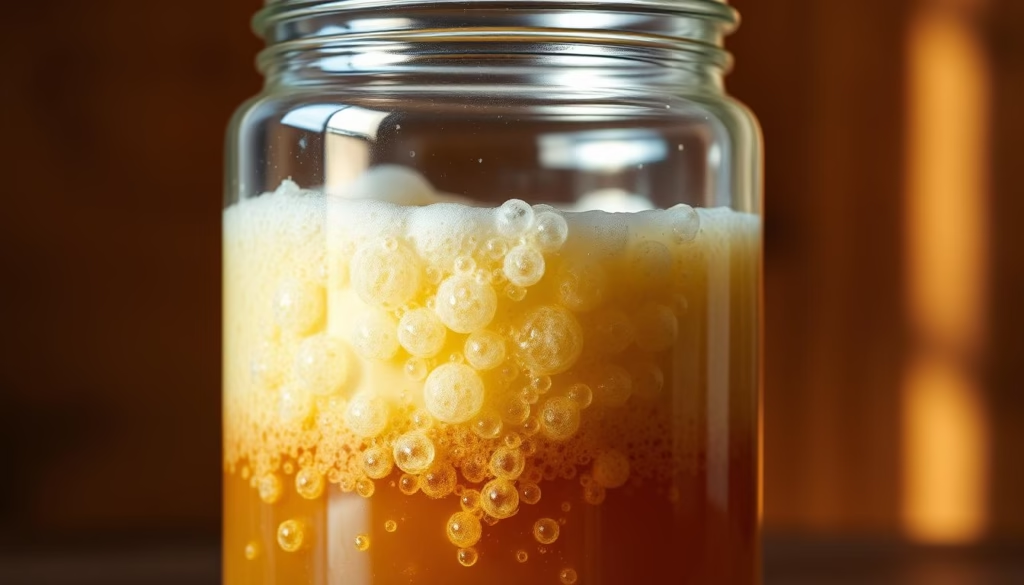
When to build a starter: Liquid strains often lack enough cells for high-gravity brews (OG ≥ 1.060). A starter grows cell counts, reduces stress, and cuts the chance of fusels. For most liquid strains, plan a starter—especially for stronger beers or when the yeast pack is several months old.
When to make a starter (and why underpitching hurts)
Underpitching is a common cause of off-flavors and slow, stuck ferments. A well-sized starter gives you a healthy population that kicks fermentation off cleanly.
Rehydrate dry yeast and keep a spare sachet on hand
Dry yeast usually has adequate cell counts. Still—rehydrate in warm, sanitized water per John Palmer’s guidance to wake cells gently and confirm viability.
- Backup plan: Keep a spare sachet; if no visible activity in ~48 hours, pitch it and save the batch.
- Use calculators to right-size your pitch by style and gravity.
- Log starter volumes and outcomes so you refine your approach each brew.
The reason this works is biological: cells reproduce in the starter and arrive at the main ferment ready to work. That’s the simplest, most reliable advice for cleaner, consistent homebrew results.
Oxygen Matters: Aerate Your Wort the Right Way
Oxygen is the invisible helper that gets yeast out of the gate and into productive work. Give yeast enough air before you pitch and fermentation will start strong.
Drill-mounted aerators vs. vigorous pouring
Two common ways to add oxygen are a drill-mounted aerator and a simple pour. A drill-mounted aerator on a long bit churns the wort fast. That action builds a foamy head—a clear sign of good aeration.
If you lack gear, pouring wort back and forth into the fermenter is a practical alternative. Do it with purpose: pour from a height to break the surface and trap air in the liquid.
“A few focused minutes of aeration now can save you hours of troubleshooting later.”
- Why oxygen matters: yeast need it to build healthy cell walls and begin fermentation cleanly.
- Aerate right after chilling and before pitching—timing is everything.
- Avoid oxygen exposure after fermentation; it stales the final product.
- Combine solid aeration with correct pitch rates to reduce lag and off-flavors during brewing and brew day routines.
Practice this on your next brew—a short, deliberate aeration step pays dividends in fermentation speed and quality.
Control Fermentation Temperature for Cleaner, Consistent Beer
A steady fermentation temperature is the single change that most brewers credit for fewer off-flavors and more consistent batches.
Why it matters: active fermentation often runs hotter than the room. If your room is 70°F the fermenting wort can peak near 80°F. That rise pushes yeast into ester and fusel production—flavors most brewers try to avoid.
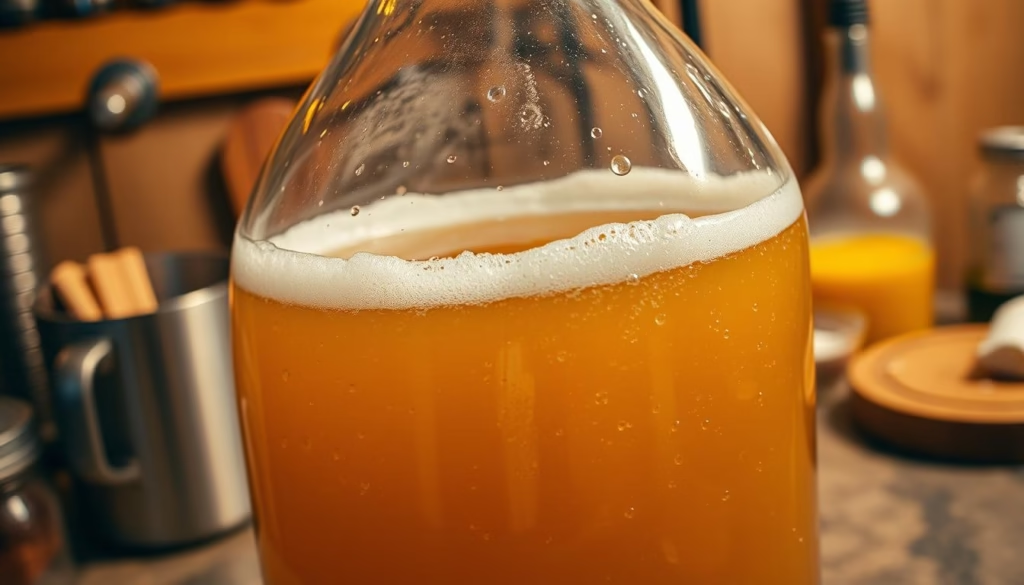
Understanding ambient vs. internal heat
Measure the actual liquid, not just the room. Internal fermentation can sit about 10°F above ambient during peak activity.
Fridge control, probes, and the ideal ale range
Use a temp-controlled fridge or chest freezer and place a probe on the fermenter or inside a thermowell. For most ales, aim for 65–70°F to keep esters and fusels in check.
Priorities: fermentation over mash
Don’t panic over a degree or two off in your mash. Stability during fermentation matters far more for final flavor.
- Plan a cooling strategy before you pitch.
- Control the fermentation temperature, not just the room.
- Consistency here gives predictable styles and cleaner results.
Conditioning and Time: Let Flavors Settle Before Packaging
A quick finish isn’t the same as readiness; maturation inside the fermenter matters.
Primary fermentation often wraps in 4–5 days. But give the batch about two weeks in the fermenter so yeast can reabsorb sulfur, diacetyl, and acetaldehyde.
Two-week guideline and how to judge readiness
Don’t rush to bottles or a keg. Small particulates settle and flavors smooth with time.
Taste samples near day 10–14. Your tasting is the best guide for when to transfer.
- Rule of thumb: wait roughly two weeks even if visible activity stops.
- Clarity often improves as solids drop out—this helps aroma and mouthfeel.
- Conditioning in the fermenter stabilizes later carbonation in bottles and kegs.
- Every beer varies—use visual cues and tasting notes to decide if extra days help.
| Stage | Typical Days | Signs to Move |
|---|---|---|
| Primary finish | 4–5 | Gravity steady for 2 days |
| Fermenter conditioning | 10–14 | Off-flavors fading, clearer liquid |
| Packaging | After ~14 | Clean taste on sample; ready for bottles/keg |
Better Water, Better Beer: Profiles, pH, and Practical Fixes
Water is the silent majority—roughly 90% of the final drink—so start by knowing your source.
Get a municipal report or send a sample to Ward Labs. A clear mineral profile makes recipe adjustments simple.
If your supply is uncertain, use RO or distilled as a blank canvas. Then add minerals to suit the style you want.
Removechlorine and chloramine
For city water, neutralize chlorine or chloramine to avoid plastic or medicinal notes. Use a half Campden tablet per 10 gallons or run a slow pass through a carbon block filter.
Salts for balance
Gypsum (calcium sulfate) raises sulfate to boost perceived hoppiness. Calcium chloride raises chloride to round malt character.
- Water chemistry shapes mouthfeel and flavor—do the research up front.
- Match your mineral additions to common recipes and the style you aim for.
- Keep pH in mash and boil windows—stable pH supports enzymes and clean bitterness.
| Action | Why it matters | Quick dose |
|---|---|---|
| Test source | Know baseline minerals | Utility report or Ward Labs |
| Dechlorinate | Removes off-notes | ½ Campden per 10 gal or carbon filter |
| Add salts | Shape hop vs. malt perception | Gypsum or CaCl₂ per style |
Log every addition and note outcomes. Your data turns early work into consistent results in future batches of brewing.
Dial In Your Setup: Equipment, Volume Marks, and Process Control
A solid setup removes guesswork and keeps each brew day predictable. Invest in quality once and your future batches will thank you. Durable kettles, reliable fermenters, and a temperature controller reduce variables that spoil flavor.
Invest once: long‑term purchases that pay off
Buy equipment that lasts. Stainless kettles and sturdy fermenters are upfront costs that cut replacement headaches later. A temp controller and fridge are high‑ROI purchases when temperature drift ruins a batch.
Measure volumes and control the process
Mark volumes with a wooden dowel or an etched dip stick for kettles. Add external marks to carboys and fermenters so pre‑ and post‑boil numbers are repeatable.
- Calibrate boil‑off and trub losses so gravity and batch size hit targets.
- Plan purchases around bottlenecks—fix the biggest limit first.
- Standardize every step from milling to chilling and log results.
- Maintain and clean gear so variability doesn’t creep into your beer.
Brew Simply, Log Everything, Taste Critically
Start small and steady: pick a forgiving style and repeat a single recipe until you can spot real differences.
Begin with darker, simpler styles like stouts or porters. They hide minor faults and let you focus on sanitation, pitching, and temperature. That makes early learning less frustrating.
Keep a clear brewing log for every batch. Note ingredients, mash temps, timings, pitch rates, and visible signs during fermentation. Over time those notes reveal patterns you can act on.
Train your palate
Tasting is skill. Learn to name off-flavors—plastic/medicinal, DMS, or acetaldehyde—and link each to likely causes. That narrows fixes quickly.
- Repeat one straightforward recipe to learn its normal profile.
- Make small, controlled changes rather than big swings.
- Log results so improvements compound with every batch.
“Describe what you taste—then test one variable at a time.”
| Focus | Action | Why it helps |
|---|---|---|
| Starter recipe | Repeat 3–5 times | Builds baseline familiarity |
| Logging | Record temps, times, notes | Find cause-and-effect fast |
| Tasting | Name off-flavors, compare | Diagnose and correct process |
Conclusion
Good results come when you focus on the few controls that matter most—clean gear, steady temperature, and healthy yeast.
Make those steps routine: sanitize thoroughly, use a starter or rehydrate pitched yeast, and oxygenate the wort before you pitch. Watch fermentation with a probe and keep it in a temp‑controlled fridge so batches stay predictable.
Treat water as an ingredient—use RO or test your source, then add salts to suit the style. Visit your local shop for fresh ingredients and fast fixes, log every run, and brew one recipe until you know its normal curve.
Do this and each batch becomes a learning loop—small changes, clear records, better beers over time.
FAQ
How do I get started safely—where should I research first?
Start with reputable sources: the American Homebrewers Association, Brewers Friend, and well-reviewed recipe books like John Palmer’s “How to Brew.” Visit a local homebrew shop for hands-on advice and ingredient purchases. Read a few recipes end-to-end so you understand the full process before you begin.
What defines quality ingredients for a successful batch?
Quality means fresh malt, vibrant hops, and viable yeast. Check malt for a sweet, grainy smell and no mustiness. Hops should be stored cold and smell green and citrusy or resinous depending on variety. Yeast should be within its best-by date and stored refrigerated. If water tastes off, treat it or use RO/distilled and rebuild a profile with brewing salts.
How important is sanitation, and what products work best?
Sanitation is critical—contamination ruins batches faster than any other mistake. Use PBW or a similar oxygen-based cleaner for scrubbing, then a no-rinse sanitizer like Star San before the fermenter sees wort. Sanitize anything that touches cooled wort or beer: fermenters, airlocks, tubing, and bottles.
When should I make a yeast starter and when is rehydration enough?
Make a starter for liquid yeast or high-gravity beers to ensure adequate cell counts. Rehydrate most dry yeasts per manufacturer instructions for low- to moderate-gravity ales. Always keep a spare sachet in the fridge as a backup—underpitching leads to stressed yeast and off-flavors.
How should I oxygenate wort before pitching yeast?
Aeration gives yeast the oxygen they need early on. For ales, vigorous shaking or pouring between sanitized vessels works. For consistent results, use a drill-mounted aerator or an aquarium pump with a sterile filter. Avoid aerating after fermentation starts—oxygen then causes oxidation flavors.
What fermentation temperature should I target for ales and lagers?
Aim for stable temperatures in the yeast’s preferred range. Many ales prefer 65–70°F for clean esters. Lagers need much colder temps and a proper diacetyl rest. Use a temperature-controlled fridge or chest with a controller and a probe placed near the fermenting wort for accurate readings.
How long should I let beer condition before packaging?
A good rule: at least two weeks in the fermenter for most ales, but give more time for larger or darker styles. Off-flavors often fade with time as yeast clean up byproducts. Bottle or keg when specific gravity is stable across several days and the beer tastes finished.
How do I manage water chemistry for better results?
Start by checking your municipal report or get a Ward Labs test. If your water has chlorine or chloramine, remove it with Campden tablets or carbon filtration. Use RO or distilled water when your tap is unsuitable, then add gypsum or calcium chloride to match the style’s profile.
What gear should I invest in first to improve consistency?
Prioritize a reliable kettle, a temperature-controlled fermenter or refrigerator with a controller, and a quality hydrometer or refractometer. Volume marks or a dipstick on fermenters help hit target batches. Good cleaning and sanitizing supplies are equally essential.
How can I learn to identify off-flavors and fix them?
Keep a brewing log with ingredients, temperatures, times, and tasting notes. Train your palate by comparing known-flavor references—diacetyl (buttery), phenolic (clove/medicinal), acetaldehyde (green apple). Match the off-flavor to likely causes—temperature swings, poor sanitation, or yeast stress—and adjust the process next time.
Should I start with complex recipes or keep things simple?
Keep it simple at first. Choose styles with forgiving fermentations—brown ales, amber ales, or simple stouts—before tackling complex hop-forward or high-gravity beers. Simple recipes reduce variables while you dial in your process and equipment.
How do I store hops and yeast to protect freshness?
Hops last longest vacuum-sealed in the freezer. Whole-cone hops in foil packaging or pellet hops in vacuum bags work well. Store liquid yeast in the fridge and keep dry yeast cold and sealed. Proper storage preserves aroma and viability for better end results.