You remember your first batch — the mix of pride and nervous waiting as foam climbed the airlock. That feeling is why you tinker, upgrade, and learn. Best Homebrewing Equipment For Home Made Beer Brewing better beer starts with choices that match your goals and your space.
This guide walks you through the real path many brewers take: from starter plastic and glass fermenters to stainless steel with ports and pressure transfer. You’ll see why single-vessel electric BIAB systems can cost near $1,000 and why many makers move from bottling to kegging for fresher results.
We’ll cover chilling options — from ice baths to plate and glycol chillers that cut chill time to minutes — and controls like Inkbird-style digital remotes that add safety and repeatability. Expect candid trade-offs and clear advice so you buy what matters now, not what’s hyped.
Key Takeaways
- You’ll learn which gear improves quality and which upgrades give the best value.
- Stainless fermenters and kegging boost flavor stability and convenience.
- Electric BIAB and precise temp control enhance repeatability on brew day.
- Faster chilling and better sanitation reduce off-flavors and infections.
- Plan purchases around space, budget, and the styles of beer you love.
Why this product roundup matters for brewing beer in the United States today
Choosing the right gear shapes how smoothly you move from hot wort to a cold, clear pint.
This roundup filters the noise so your dollars go to items that improve flavor, safety, and repeatability—not to shiny hype. We focus on what’s available in the US and the realistic price ranges that most brewers actually buy.
Starter kits usually include a kettle, a fermentation bucket with lid and airlock, a bottling bucket, a long-handled spoon, siphon gear, and a capper. Many bundles add an ingredient kit: malt extract, hops, yeast, and sometimes steeping grains.
A basic extract process is simple: steep grains if present, boil with extract and hops, cool the wort, top to 5 gallons, then pitch yeast and let fermentation run for 1–2 weeks before packaging.
- You have more choices than ever—so it’s easy to overspend or buy the wrong piece at the wrong time.
- If you want start quickly, a starter kit gives essentials; later upgrades fix real pain points like chilling speed or packaging oxygen.
- We point you to trusted learning sources—How to Brew (Palmer) and the RDWHAHB mindset from Papazian—to keep learning practical and calm.
“Stay calm — beer wants to become beer.”
Top homebrewing equipment: the essential roundup for your next brew day
A smooth brew day starts with sensible choices—what you buy now should solve real problems, not impress strangers.
Beginner kits usually bundle a kettle, fermenter bucket with airlock, bottling bucket, siphon, and capper. Some kits add an ingredient pack so you can brew quickly and learn the basics.
Fermenter upgrades follow a clear path: plastic bucket to glass carboy to stainless steel with ports and tri-clamps. Plastic is cheap but scratches. Glass shows activity but is heavy and fragile. Stainless adds sampling valves and safer transfers.
- Kettle and bag: a good kettle with a sturdy bag (BIAB) can replace multi-vessel rigs for all-grain brewing.
- Propane vs electric: propane burners are flexible outdoors; electric all-in-ones add precise control and recirculation.
- Chilling: start with ice baths or an immersion coil, then move to plate/counterflow with pumps, and consider glycol for fast cool-downs.
“Prioritize fermenter sanitation, chilling speed, and basic temp control—those upgrades give the best return on time and taste.”
If you want model-level guidance, click expand where we map specific rigs and realistic price points so you don’t overspend on features you won’t use yet.
Fermenters that change everything: buckets, glass carboys, and conicals
A fermenter can be the single upgrade that makes brew days simpler and beer cleaner. Choose the right vessel and you cut oxygen, make dry hopping easier, and speed transfers.
Plastic fermentation buckets get you brewing fast and cheaply. They scratch easily—scratches trap microbes—so clean gently and replace if deeply scuffed.
Glass carboy offers visual feedback. You can watch krausen and activity, but it’s heavy and fragile. Use carriers and avoid thermal shock.
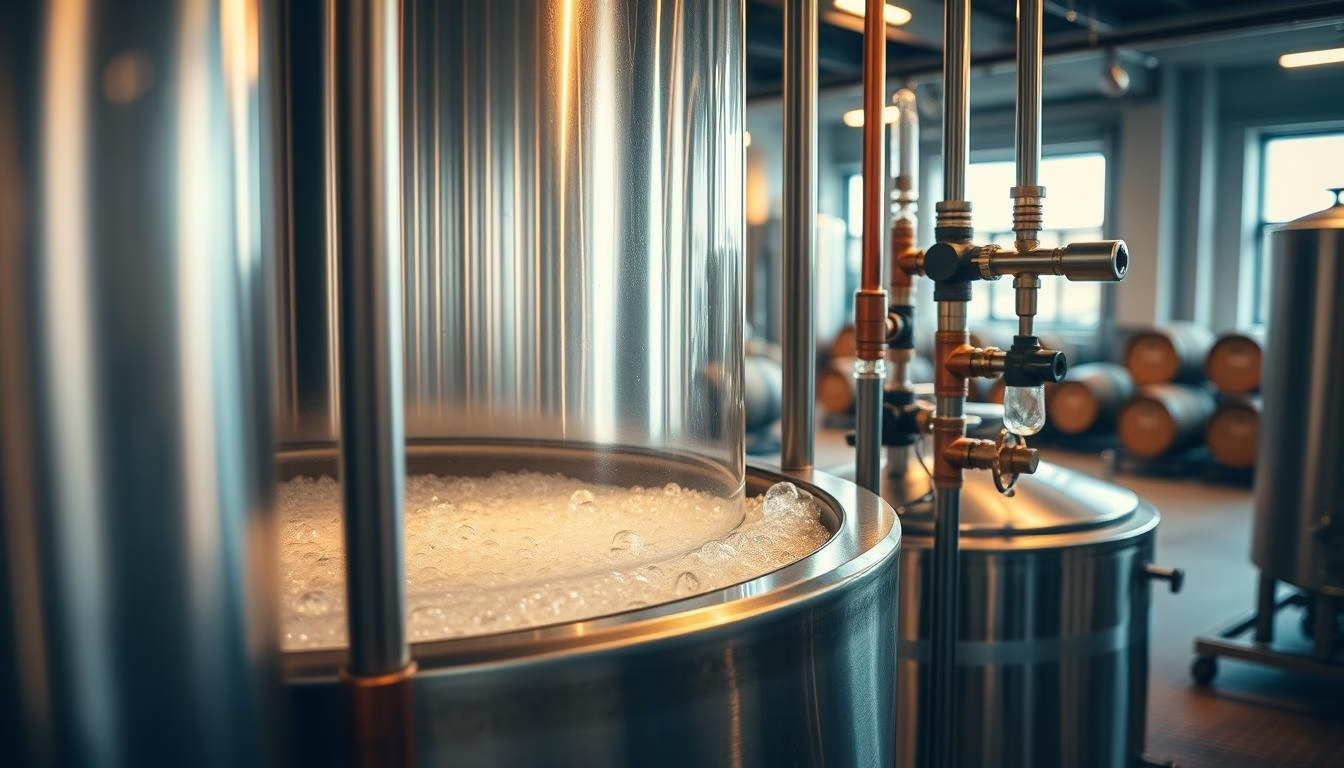
Stainless and true conical fermenters add ports for spunding valves, thermowells, and sampling. Pressure transfers cut oxidation and help hop-forward beer stay fresh. Many brewers wish they’d moved to an 8-gallon Delta FermTank earlier for easier dry hopping and cleaner transfers.
- Capacity tip: an 8-gallon vessel pairs well with a 5-gallon batch to manage krausen.
- Sanitation: use non-abrasive cleaners on plastic, gentle brushes on glass, and PBW + CIP on stainless.
- Upgrade timing: switch to stainless once you commit to regular brewing.
| Type | Pros | Cons | Best use |
|---|---|---|---|
| Plastic bucket | Cheap, lightweight | Scratches, infection risk | Starters, budget builds |
| Glass carboy | Visual monitoring | Heavy, fragile | Observation and secondary ferment |
| Stainless / Conical | Ports, pressure transfers, durable | Higher cost, heavier | Advanced brews, kegging-ready |
Brewing systems and kettles: from propane burner to electric BIAB
Decide where you want to brew—outside with open flame or inside with controlled power. That choice steers the rest of your setup and how much hands-on attention a brew day needs.
Propane burner with a full-batch kettle
Affordable and powerful. Many brewers start on a 5-gallon kettle over a propane burner, then move to 10-gallon kettles for full-batch all-grain.
Watch the boil and hot break closely—overshoots cause boil overs. Use a wind screen and a stable stand for safety.
All-in-one electric eBIAB systems
Precision and repeatability. Electric BIAB rigs like the Clawhammer 120V bring steady temperature control and recirculation. They cut guesswork and fit small homes with a dedicated circuit.
HERMS/RIMS and multi-vessel rigs
These setups add pumps, plate chillers, and more plumbing. They excel at step mashing and scaling but raise cleaning and complexity.
- Propane: quick heat, watch the boil.
- Electric: stable ramps, easier repeatability.
- Multi-vessel: precision, more parts to manage.
| System | Strength | Drawback | Best for |
|---|---|---|---|
| Propane + Kettle | High heat, low cost | Weather dependent, hands-on | Outdoor brewers and fast boils |
| Electric eBIAB | Precise temp control, compact | Higher upfront cost, circuit needed | Indoor brewers wanting repeatability |
| HERMS/RIMS | Advanced mash control, scalable | Complex plumbing, more cleaning | Serious brewers and large batches |
“Pick the method that fits your space and goals—simplicity wins more batches than shiny complexity.”
Managing hops like a pro: hop spiders, bags, and dip tube filters
Managing hop debris starts at the boil and ends at the keg; small steps save aroma and yield.
Boil-side control with a focused filter
A hop spider keeps pellets and cones corralled during the boil. That means fewer solids in the kettle and less chance of clogging plate or counterflow chillers.
Cleaner wort helps whirlpooling and protects pumps. For sensitive chillers, even small reductions in particulate matter prevent expensive clogs.
Dry-hop choices and cleanup
Free-floating additions often give better contact and aroma but make transfers trickier. Use a dip tube filter when you rack to catch debris and recover more beer.
Muslin bag work well for tidy transfers—sanitize first and avoid overstuffing to keep extraction high. Keg hoppers let you add hops after fermentation while limiting oxygen exposure.
- Quick tip: plan timed boil additions and a repeatable contact schedule to keep aroma consistent.
Wort chilling choices that save minutes on brew day
Cooling your wort quickly cuts risks and lets you pitch yeast sooner—here’s how to shave serious minutes off brew day.
Ice bath basics: the starter method and why it limits you
Ice baths are cheap and work in a pinch for small batches at home. They slow as the water warms, though, so a full boil can stretch your brew day and raise DMS risk.
Making ice helps, but that adds prep and space needs. For occasional brews they are fine; for regular brewing they become a time sink.
Immersion and plate chillers: faster cooling, pump considerations
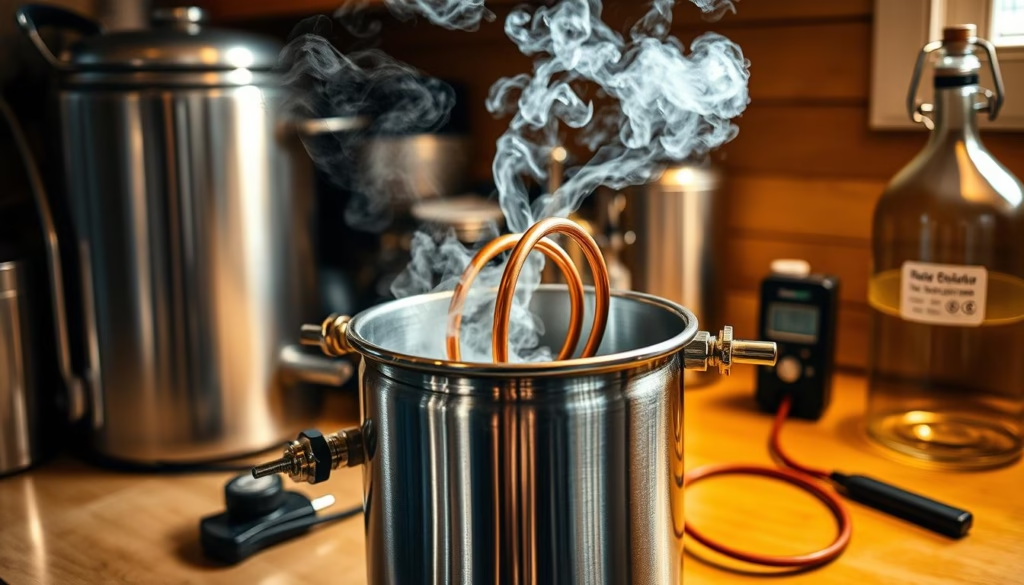
An immersion chiller is the best first upgrade. You can build one for under $50. It sanitizes easily and is fast enough for most ales.
Plate and counterflow chillers cool far quicker but usually need a pump and clean water flow. They move heat off the wort fast and protect pumps and lines from clogging.
Glycol chillers: premium speed and tight control
Glycol systems cost more—often $400–$1,000—but they can drop wort from a boil to pitching temperature in roughly 15 minutes.
That time savings limits off-flavors and shortens the window when airborne microbes can land in wort. Manage your groundwater temps with a pre-chiller or recirculated ice loop in summer.
- Flush and sanitize chillers after use; plate units like immediate backflushing.
- Faster cooling also reduces burn risk and improves workflow with less downtime between steps.
Packaging your beer: bottling, kegging, and keezer builds
Packaging is where weeks of careful brewing meet the real test—how you seal and serve matters more than you think.
Bottling is the entry route for many brewers because it’s cheap. It works, but it’s slow—cleaning, sanitizing, filling, and capping dozens of bottles eats up an afternoon. Oxygen pickup during bottling can dull hop aroma and speed staling, especially with juicy NEIPAs.
Bottling: entry-level, time-consuming, oxidation risks
Use careful siphoning and a bottling wand to limit splashing. Wipe seals, purge caps, and chill bottles before storage to keep flavors bright.
Kegging with Cornelius kegs
Kegging preserves freshness and makes serving simple. Corny kegs are standard—easy to clean, easy to maintain, and great for hop-forward beer. Closed transfers and CO2 purging cut oxygen and protect aroma.
Building a keezer
A keezer converts a chest freezer into a multi-keg fridge and can double as a cold-crash chamber. Expect a budget near $250–$700+, depending on regulator, manifold, and taps. Spend on a quality regulator and lines—they determine pour quality.
- Packaging is where you protect weeks of work—invest wisely.
- Keep transfers closed and CO2-purged to reduce oxygen pickup.
- Corny kegs and a keezer speed serving and improve freshness.
| Method | Speed | Freshness | Best use |
|---|---|---|---|
| Bottling | Slow (hours) | Moderate; risk of oxidation | Budget-friendly, small runs |
| Kegging (Corny) | Fast | High; CO2-sealed | Frequent drinkers, NEIPAs |
| Keezer | Very fast serving | Very high; cold crash capable | Multi-keg tap setups, home draft |
Monitors and controls: from manual readings to full automation
A few well-chosen meters and a simple controller change how confidently you brew and cellar beer at home.
Thermometers that matter
Manual thermometers last forever, but a digital remote unit (~$50) saves tidy amounts of time and worry.
You can step away from the kettle and still catch a mash or boil drift before it matters.
Hydrometers, the Tilt, and Plaato
Traditional hydrometers are cheap and accurate. They work without batteries or Wi‑Fi.
Gadgets like the Tilt or Plaato add convenience and logs. They aren’t essential for every recipe.
Use smart sensors when you want continuous gravity or airlock data. Skip them if you follow a trusted process and familiar recipes.
Automation and temperature control
Inkbird-style controllers give the biggest return: steady fermentation and reliable serving temps in a keggerator or keezer.
Start with temp control, then add logging or alarms. Keep probes food-safe and routed away from splashes.
- Verify thermometer calibration regularly.
- Sanitize sampling tools before gravity checks.
- Log only the readings you will actually use for repeatability.
“Automation should simplify, not complicate.”
Starter kits vs all-grain paths: choosing your first (or next) setup
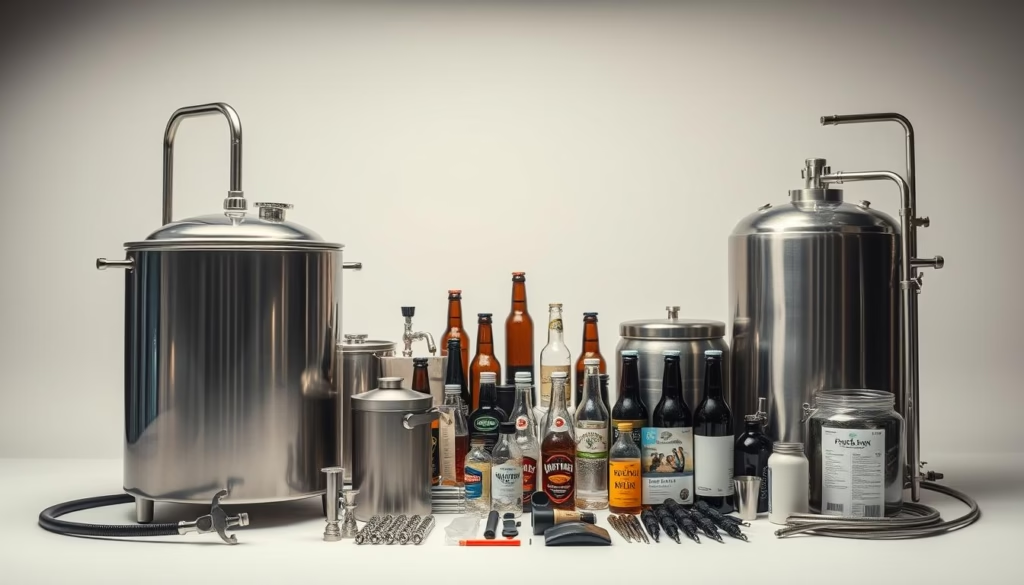
A clear route from water to fermenter helps you decide whether to start simple or learn mash science immediately. If you want start quickly, a condensed path keeps variables low and fun high.
Extract plus steeping grains
An extract kit usually includes malt extract, hops, yeast, and sometimes steeping grains. The basic step: heat 2–3 gallons of water, steep grains if included, boil with extract and hops, cool, move to the fermenter bucket, top to 5 gallons, and pitch yeast.
Why it works: the reduced process means fewer things to manage, so you can focus on sanitation and yeast health.
All-grain options and upgrades
All-grain opens recipe control—mash temps, water-to-grain ratios, and efficiency. Start with a picnic cooler mash tun and a propane turkey fryer for heat, then scale to three converted kegs with pumps and a plate chiller or an electric all-in-one.
- If you want to brew more precisely, all-grain is the path.
- Starter kits bundle tools so you learn technique before buying big upgrades.
- Keep ingredients fresh—milled grain, viable yeast, and fresh extract matter.
- Plan upgrades as you learn; don’t overbuy on day one.
Learn better, brew better: books, clubs, and trustworthy sources
A few trusted references and hands-on mentors do more for your beer than chasing every gadget. Start by building a small library and a small circle of people who taste, test, and teach.
Core books anchor your process. John Palmer’s How to Brew (4th edition) explains modern techniques with practical science you can apply immediately.
Charlie Papazian gave brewers permission to relax—RDWHAHB (Relax, Don’t Worry, Have A Homebrew) keeps you experimenting without panic. Use that mindset when you track results.
Local clubs and videos: finding mentors and filtering sketchy advice
Join a local club to speed learning. Tasting panels and demos teach setup, sanitation, and process tips faster than solo practice.
YouTube can be great, but vet channels. Prefer videos that show data, explain trade-offs, and match established best practices before changing your routine.
- Note every batch: temps, timings, water tweaks, and yeast health—track this across a year.
- Compare to breweries: pick a brewery you admire, copy one variable at a time, and measure changes.
- Click expand for a curated list of books, forums, and clubs that reliably teach tested methods.
“Learn from good sources, taste with friends, and change one thing at a time.”
| Resource | Strength | Best use |
|---|---|---|
| How to Brew (Palmer) | Modern methods, clear science | Foundational process and troubleshooting |
| The Complete Joy of Homebrewing (Papazian) | Mindset and approachable steps | Start brewing confidently; reduce anxiety |
| Local club / mentor | Hands-on demos, tasting feedback | Practical skill growth and gear guidance |
Buyer’s guide: plan your setup and avoid the hype
Good planning beats flashy marketing — a solid day-of plan saves you headaches and ruined batches.
Single-vessel brewers often do the same job, so your skill and care matter more than brand names. Protect heating elements, size wattage to your circuit, and map your cleanup flow before you buy.
Plan your brew day: protect elements, right wattage, proper care
Before purchase, check power availability and breaker limits in your home. Oversized wattage can trip circuits or scorch wort.
Maintenance is non-negotiable: rinse elements and screens after each batch and schedule deep cleans monthly. That keeps performance up and repairs down.
Marketing vs performance: think before you buy and scale with intent
Ask what a system actually changes — temperature stability, reduced oxygen, or saved time — and measure that point against the price. Social media can sell polish; you want measurable gains.
- Plan the brew day flow: power, element protection, cleanup, and storage.
- Pick wattage that matches batch size and household circuits.
- Rinse parts immediately and deep clean on schedule.
- Compare features to outcomes — will this save meaningful time or improve consistency?
- Avoid flashy add-ons; buy gear that fixes your current bottleneck.
- Scale gradually — get what you’ll use now, not the ultimate setup that gathers dust.
- Click expand: use our checklist to turn marketing claims into testable criteria.
- Click expand: review a short buyer checklist before checkout.
“At home, reliability and repeatability beat novelty—choose durable parts you can service yourself.”
Conclusion
Your next best move is usually smaller than it feels—one fermenter upgrade or a better chiller will pay back batches. ,
Prioritize a clean, safe fermenter and steady temperature control. Move from a plastic bucket to stainless when you brew regularly. Use a glass carboy only if you accept the handling risk.
Choose a system that fits your space: a propane burner plus a sturdy kettle, an electric eBIAB for repeatability, or HERMS/RIMS when you scale. Faster chilling—immersion first, then plate/counterflow, then glycol—protects wort and cuts minutes off brew day.
Packaging and monitoring matter: bottles teach technique, but kegs and a keezer keep beer fresh. A remote thermometer and an Inkbird-style controller give the most reliable gains.
Plan purchases around power, water, and cleanup. Stage upgrades, document batches, and focus on temperature, oxygen control, and sanitation—those choices make better beer, batch after batch.
FAQ
What basic pieces do I need to start brewing beer at home?
At minimum you need a kettle to boil wort, a fermenter (bucket or carboy), an airlock, sanitation solution, basic measuring tools (thermometer and hydrometer), hops, malt extract or grains, yeast, and bottles or a keg for packaging. Starter kits bundle most of this and are a practical way to begin without guessing about parts.
Should I choose a plastic fermentation bucket, glass carboy, or stainless conical?
It depends on priorities. Plastic buckets are inexpensive and lightweight for beginners but scratch easily, which can trap bacteria. Glass carboys let you see fermentation and are inert, yet they’re heavy and breakable. Stainless steel conicals are durable, offer ports for racking and pressure transfers, and scale well if you plan many batches—but they cost more.
What are the pros and cons of BIAB (brew-in-a-bag) versus multi-vessel systems?
BIAB is simple and affordable—one kettle, a grain bag, and fewer pumps. It’s great for smaller batches and fast setup. Multi-vessel rigs (HERMS/RIMS or three-vessel systems) give you finer temperature control and efficiency for all-grain brewing and larger batches, but they require pumps, plumbing, and more space.
Do I need an immersion chiller, plate chiller, or glycol system to cool wort?
An immersion chiller is an inexpensive, effective step up from an ice bath—just dunk it in the kettle and run cold water. Plate (counterflow) chillers cool faster and are better for higher volumes, but they need a pump for best results. Glycol chillers are premium—fast cooling and precise temp control—ideal for commercial or high-frequency brewers.
How can I manage hops to keep my equipment cleaner?
Use hop spiders or stainless hop baskets during the boil to confine hop matter and simplify cleanup. For dry hopping, muslin bags or purpose-built keg hoppers reduce clogging. Also consider dip tube filters for transferring to kegs to catch hop debris and trub.
Is a propane burner necessary, or should I get an electric system?
Propane burners paired with full-batch kettles are flexible, portable, and offer high BTU power for rapid boils. Electric eBIAB or all-in-one systems give precise temperature control, recirculation, and cleaner indoor setups. Choose based on location, noise restrictions, and how hands-on you want to be during brew day.
What’s the fastest way to chill wort if I’m short on time and budget?
An immersion chiller connected to a garden hose is the best budget/fast compromise. It cools faster than an ice bath and is simple to use. If you have a pump, a plate chiller speeds things further; glycol systems are fastest but more costly.
Should I bottle or keg my beer first time out?
Bottling keeps startup costs low but takes more time and increases oxidation risk if not careful. Kegging (Corny kegs) costs more up front but keeps beer fresher, simplifies serving, and is particularly useful for hop-forward styles like NEIPAs. Consider your space, budget, and patience.
What monitors and controls are most helpful for consistent results?
A reliable digital thermometer and a good hydrometer are essential. Devices like Tilt or Plaato offer real-time fermentation data for active monitoring. For temp control, Inkbird controllers provide repeatable performance for fermentation chambers and kettles.
Can I start with extract kits and move to all-grain later? How hard is the jump?
Yes—starting with extract plus steeping grains teaches boil, sanitation, and fermentation basics. Moving to all-grain involves learning mash techniques (cooler mash, BIAB, or multi-vessel mash systems), grain handling, and efficiency management. It’s a manageable step—many brewers upgrade as confidence and batch frequency grow.
What books or resources should I trust to learn brewing science and technique?
Classic, trustworthy resources include John Palmer’s How to Brew for fundamentals and the “RDWHAHB” (Relax, Don’t Worry, Have a Homebrew) mindset in brewing communities. Local homebrew clubs, instructional videos from established breweries, and forums with experienced brewers are great for practical tips and troubleshooting.
How do I plan a brew day to avoid common mistakes?
Make a checklist: recipe and ingredient prep, sanitation plan, correct water treatment, kettle and mash setup, cooling strategy, and fermentation schedule. Protect electrical elements, confirm burner or element wattage, and have spare sanitation supplies. Planning reduces mistakes and keeps timing tight on brew day.
What do I need to consider when building a keezer or kegerator?
Size and number of kegs, temperature control for cold crashing and serving, CO2 system sizing, and a draft tower or picnic taps. Insulation, shelving layout, and drainage help with cleanup. A keezer gives multi-keg capacity and better control than single-tap setups.
How much does scaling up to many batches or a small brewery change my gear choices?
Scaling up shifts priorities to durability, sanitation access, and automation—stainless conicals, pumps, plate chillers, and glycol systems become worthwhile. You’ll factor in workflow, cleaning ports, and parts that reduce manual labor and speed transfers for multiple batches.