What’s the Best Homebrew Beer for a Beginner?
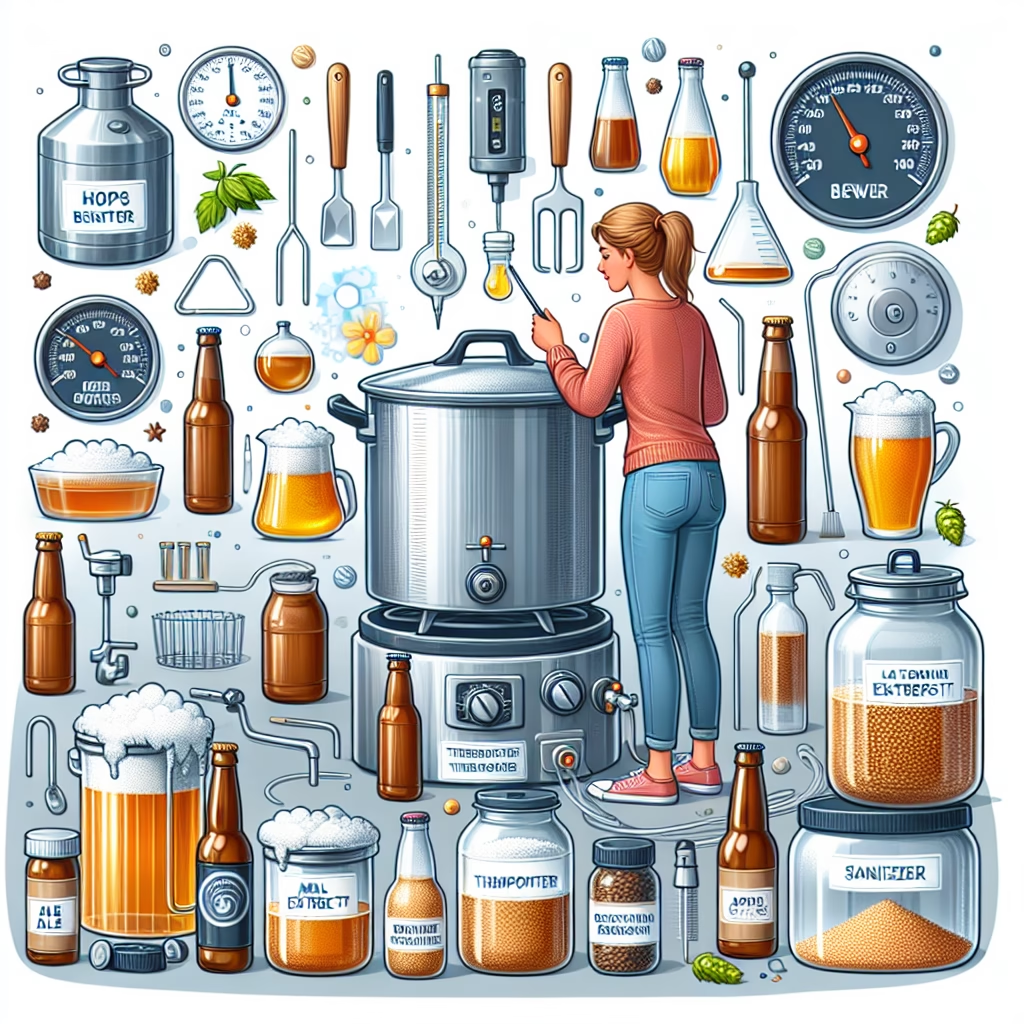
Table of Contents
When you’re brewing your first batch at home, Best Home Brew Beer for Beginners and the “best” beer has less to do with the final style and more to do with how forgiving the process is. As a beginner, you want a recipe that’s simple, resilient to small mistakes, drinkable in a few weeks, and delicious enough to make you excited for batch number two.
This guide breaks down what makes a great beginner beer, which styles fit the bill, what to avoid at first, two proven starter recipes (one for extract, one for all-grain), and a handful of process tips that matter more than any single ingredient.
What Makes a Beer Beginner-Friendly?
Before picking a style, focus on brewing characteristics that boost your chances of success:
- Simple grain bill or extract base: Fewer ingredients mean fewer variables and a cleaner, more consistent flavor.
- Moderate gravity: Aim for an original gravity (OG) around 1.040–1.050. Lower alcohol beers ferment more reliably and are ready sooner.
- Forgiving yeast: Choose strains that perform well across a range of temperatures and don’t require advanced fermentation control.
- Minimal hop complexity: A straightforward hop schedule (one bittering addition and one late/flameout addition) reduces the chance of mistakes.
- Quick turnaround: Beers that are ready to drink in 3–5 weeks keep momentum and morale high.
Top Beginner Styles (With Pros, Cons, and Flavor Notes)
American Blonde Ale
- Why it’s great: Clean, approachable, and flexible. It shows off malt and hop balance without demanding precision.
- Flavor profile: Light malt sweetness, subtle citrus/floral hops, crisp finish.
- Yeast: Chico strains like US-05, WLP001, or WY1056.
- Pros: Clear, easy-drinking results; short ingredient list; forgiving fermentation.
- Watch-outs: Clean styles can reveal process mistakes—but at this gravity, minor flaws are often subtle.
Hefeweizen (German Wheat Beer)
- Why it’s great: The classic banana and clove character covers small fermentation missteps.
- Flavor profile: Soft wheat, banana esters, clove phenolics, silky mouthfeel.
- Yeast: WLP300, WY3068, or Lallemand Munich Classic.
- Pros: Very forgiving; quick turnaround; minimal hopping.
- Watch-outs: Fermentation temperature influences flavor a lot (cooler = more clove; warmer = more banana). Still, it’s forgiving overall.
English Ordinary Bitter
- Why it’s great: Low ABV, malt-forward character with gentle hopping.
- Flavor profile: Bready/toasty malt, earthy hops (Fuggles/EKG), soft bitterness.
- Yeast: English strains (S-04, WLP002, WY1968).
- Pros: Sessionable; ferments fast; cask-ale vibe even when bottle conditioned.
- Watch-outs: English yeasts can flocculate hard; don’t rack too early or you might stall fermentation.
Dry Stout (Irish Stout)
- Why it’s great: Roasted malt can mask minor flaws and oxidation better than pale beers.
- Flavor profile: Roast coffee, dark chocolate, dry finish, moderate bitterness.
- Yeast: Irish ale strains (WLP004, WY1084) or US-05 for cleaner profile.
- Pros: Stable flavor; forgiving; pairs well with simple hop schedules.
- Watch-outs: Over-crushing roasted barley can cause harshness; keep roast around 8–12% of the grist.
American Wheat
- Why it’s great: Lighter, cleaner cousin of hefeweizen; wheat softens mouthfeel and covers some flaws.
- Flavor profile: Grainy wheat, subtle citrus, refreshing body.
- Yeast: Clean American yeast (US-05) for neutral profile, or hefe yeast for banana/clove.
- Pros: Simple; quick; flexible yeast choice.
- Watch-outs: Wheat can slow lauter/sparge in all-grain—use rice hulls if needed.
SMaSH Pale Ale (Single Malt and Single Hop)
- Why it’s great: Teaches fundamentals—how your base malt and one hop taste together.
- Flavor profile: Clean malt backbone with a showcase hop (e.g., Cascade, Centennial, Mosaic).
- Yeast: US-05 or similar clean ale yeast.
- Pros: Educational; simple shopping list; adaptable bitterness.
- Watch-outs: With fewer components, balance matters—keep bitterness moderate (25–35 IBU).
Styles to Skip at First (And Why)
- High-gravity/imperial beers: More alcohol stresses yeast and extends conditioning time.
- Lagers: Require cold fermentation and tight temperature control most beginners don’t have yet.
- Heavily dry-hopped NEIPAs: Oxygen management becomes critical post-fermentation; hops can taste grassy/harsh if mishandled.
- Sour and mixed-fermentation beers: Require special microbes, extra sanitation considerations, and long timelines.
- Spice- and adjunct-heavy recipes: More ingredients means more variables and risk.
The Best All-Around Choice
If you want one answer: brew an American Blonde Ale first. It’s clean, versatile, ready in about a month, and forgiving of small process mistakes. If your room is warm (70–75°F/21–24°C), consider a hefeweizen—the yeast loves it. If you prefer dark beer, a dry stout is equally beginner-friendly.
Two Simple Starter Recipes
Below are two reliable, approachable recipes tailored for beginners. One uses extract (minimum equipment, fastest brew day), the other is an all-grain SMaSH for learning the fundamentals.
1) Easy American Blonde Ale (Extract, 5 Gallons/19 L)
- Target stats:
- OG: ~1.045
- FG: ~1.010
- ABV: ~4.6%
- IBU: ~20–25
- Color: Pale gold (SRM ~4–5)
- Ingredients:
- 6.6 lb (3 kg) light liquid malt extract (LME) or 6 lb (2.72 kg) light dry malt extract (DME)
- 0.5 lb (0.23 kg) Carapils/Dextrin malt (steep)
- 0.5 lb (0.23 kg) Crystal 10 or 15 (steep)
- Hops:
- 0.5 oz (14 g) Magnum @ 60 minutes (clean bitterness), or use 0.75 oz Cascade if Magnum unavailable
- 1.0 oz (28 g) Cascade @ 10 minutes
- 1.0 oz (28 g) Cascade @ flameout (0 minutes)
- Yeast: US-05 (1 packet) or WLP001/WY1056 (1 pack)
- Water: 5.5–6 gallons (20–23 L) total, using filtered or spring water
- Process:
- Heat 2.5–3 gallons (9.5–11.5 L) of water to ~155°F (68°C). Steep Carapils and Crystal for 20 minutes, then remove.
- Bring to a boil, turn off heat, and stir in malt extract until dissolved. Return to boil.
- Start your 60-minute timer:
- 60 min: Add bittering hops (Magnum or Cascade).
- 10 min: Add 1 oz Cascade.
- 0 min: Turn off heat and add 1 oz Cascade. Steep 5–10 minutes.
- Chill wort quickly to 64–68°F (18–20°C). Top up with cool water to 5 gallons.
- Aerate by shaking for a minute. Pitch yeast.
- Ferment at 65–68°F (18–20°C) for ~10–14 days. Gravity should stabilize around 1.010.
- Cold crash (optional) 1–2 days, package, and carbonate to ~2.3–2.5 volumes CO₂.
- Drinkable in ~3–4 weeks from brew day.
- Tips and tweaks:
- For fruitiness, swap Cascade for Amarillo or Citra at 10 min/flameout.
- For a slightly maltier profile, use a small amount of Vienna or Munich in a partial mash (advanced tweak; not necessary at first).
2) SMaSH Cascade Pale Ale (All-Grain, 5 Gallons/19 L)
- Target stats:
- OG: ~1.050
- FG: ~1.010
- ABV: ~5.2%
- IBU: ~30–35
- Color: Light gold (SRM ~4–5)
- Ingredients:
- 9 lb (4.1 kg) American 2-row pale malt
- Hops (assumed Cascade ~5.5% AA; adjust for actual AA%):
- 0.6 oz (17 g) @ 60 minutes
- 0.75 oz (21 g) @ 10 minutes
- 1.0 oz (28 g) @ flameout
- Yeast: US-05 (1 packet)
- Water: Adjust to ~1.25–1.5 qt/lb (2.6–3.1 L/kg) mash thickness; total pre-boil volume depends on your system
- Process:
- Mash at 152°F (67°C) for 60 minutes. Aim for a mash pH around 5.2–5.4 (don’t overthink first time—good water often works fine).
- Vorlauf and lauter; collect pre-boil volume for a 60-minute boil.
- Boil 60 minutes with hop additions as scheduled.
- Chill to 64–68°F (18–20°C), aerate, and pitch yeast.
- Ferment at 66–68°F (19–20°C) for ~10–14 days. Confirm stable FG.
- Optional: Dry hop with 1 oz (28 g) Cascade for 3 days if you want more aroma (introduces minor oxygen risk; skip on batch one if unsure).
- Package and carbonate to ~2.3 volumes CO₂.
- Drinkable in ~3–5 weeks from brew day.
- Tips and tweaks:
- If your ambient temps are warm (70–75°F/21–24°C), use Kveik Voss yeast at 75–85°F (24–29°C) for a citrusy twist and speed.
- Try a different hop next time (Centennial for more pine/citrus, Mosaic for tropical/berry) while keeping everything else identical for learning.
Process Tips That Matter More Than the Recipe
- Sanitation is king:
- Anything that touches cooled wort must be sanitized. No-rinse sanitizers like Star San make this easy.
- Clean first, then sanitize. Dried gunk hides microbes.
- Control fermentation temperature:
- Most ale yeasts love 64–68°F (18–20°C). Warmer temps can create fusels or off-flavors—unless you’re brewing a hefe or using kveik.
- Low-tech hack: Put your fermenter in a tub of water with a t-shirt wick and swap frozen water bottles as needed.
- Pitch enough healthy yeast:
- For moderate gravity ales, one fresh dry yeast packet is typically enough.
- Rehydrate dry yeast if recommended by the manufacturer, though many pitch dry successfully for these gravities.
- Oxygenate the right thing at the right time:
- Aerate your cooled wort before pitching yeast.
- After fermentation starts, avoid introducing oxygen—especially during transfers and bottling.
- Choose simple water:
- Start with good spring water or carbon-filtered tap water. Skip salts and advanced water chemistry until you know your base beer flavor.
- Be patient, but not timid:
- Let fermentation finish; take two gravity readings 24–48 hours apart to confirm.
- Don’t rush to a “secondary” fermenter—most modern homebrewers skip it for standard ales.
- Package with care:
- If bottling, measure priming sugar by weight and use a calculator based on beer temperature and target CO₂.
- If kegging, purge with CO₂ before filling to minimize oxygen pickup.
Example Troubleshooting (Common First-Batch Questions)
- My beer tastes like banana/clove—did I mess up?
- If you brewed a hefeweizen, that’s expected. For American styles, lower your fermentation temperature a few degrees next time or choose a cleaner yeast.
- The beer is cloudy—what gives?
- With young ales, haze is common and usually harmless. Cold crash for 24–48 hours and use finings (like gelatin) if you want clearer beer next time.
- Do I need a secondary fermenter?
- Usually no. Leaving an average-strength ale in the primary for 2–3 weeks is safe and reduces oxygen (Incomplete: max_output_tokens)