Table of Contents
Overview: What You’re Brewing maybe The Best Hazy IPA Home Brew Recipe I Tried So Far – This Video Is Pretty Much On Target If You Want to Watch one if This is You First Home Brew Project DIY
This hazy IPA recipe is designed for a 5-gallon (19 L) all-grain home brew that’s juicy, low-bitterness, and packed with hop aroma. You’ll get a soft mouthfeel, big citrus/tropical character, and a stable haze that looks like it came from your favorite craft brewery. This guide focuses heavily on cleaning and sanitizing so your beer is both delicious and safe to drink with friends.
Best Hazy IPA Home Brew Recipe Target stats:
- Batch size: 5 gallons / 19 L
- Original gravity (OG): ~1.066–1.070
- Final gravity (FG): ~1.014–1.018
- ABV: ~6.5–7.0%
- Bitterness: ~30–40 IBU
- Fermentation time: ~2–3 weeks
- Style: Hazy IPA / New England IPA

Pubbin Grubbin “Best Hazy IPA Recipe Home Brew Kit I Found”
5 Gallon My Brew Supply Hazy IPA Home Brew Kit – Ideal For First Time Brew Masters.
Equipment Checklist (For Safe, Easy Brewing)
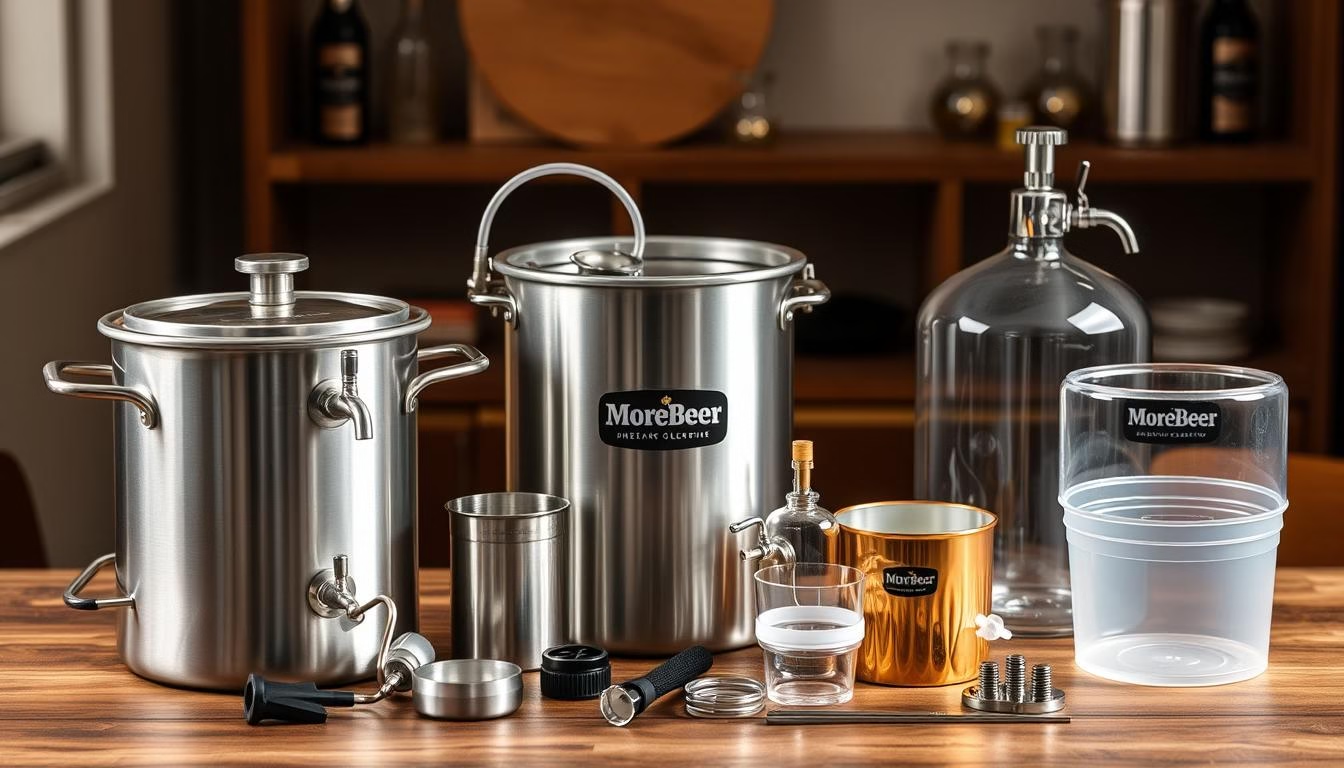
Best Hazy IPA Home Brew Recipe and You don’t need a fancy setup, but you do need clean, food-safe equipment. Make sure everything that touches your cooled wort or beer is sanitized.
- Brew kettle (8+ gallons / 30+ L)
- Mash tun or all-in-one system (BIAB or electric system works great)
- Large spoon or mash paddle (food-safe)
- Wort chiller (immersion or counterflow) or an ice bath setup
- Fermenter (6.5–7 gallon bucket or carboy with airlock)
- Auto-siphon or transfer tubing
- Bottling bucket, bottling wand, and bottle filler or a kegging system
- Bottles (crown-cap or swing-top) or a keg and CO₂ system
- Hydrometer or refractometer
- Thermometer (able to read 32–212°F / 0–100°C)
- Scale for measuring grains, hops, and additives
- Star-rated no-rinse sanitizer (like Star San or similar)
- Unscented cleaner (PBW or brewery-specific cleaner)
Non-negotiable safety rule: Anything that touches the wort after the boil must be cleaned and sanitized carefully.
Water Profile For Hazy IPA
Water chemistry is key to the Best Hazy IPA Recipe Home Brew. A chloride-forward profile gives a soft, pillowy mouthfeel and enhances “juicy” hop character.
Suggested water profile (approximate):
- Calcium: 100–150 ppm
- Chloride: 150–200 ppm
- Sulfate: 50–80 ppm
- Magnesium: 5–15 ppm
- Sodium: <50 ppm
If possible, start with RO or distilled water and add brewing salts. If using tap water, get a basic water report from your municipality and avoid heavily chlorinated water. If your tap water smells like a swimming pool, use a carbon filter or Campden tablet to remove chlorine/chloramine.
Typical additions for 8 gallons (30 L) of brewing water (example starting point, adjust based on your water):
- Calcium chloride (CaCl₂): 8–12 g total
- Gypsum (CaSO₄): 2–4 g total
- Epsom salt (MgSO₄): 1–2 g total
Aim for a chloride-to-sulfate ratio around 2:1 for classic hazy IPA softness.
Best Hazy IPA Home Brew Recipe – Step by Step Full Instruction method.
Grain Bill: Hazy, Juicy Base (All-Grain)
This grain bill is designed for the Best Hazy IPA Recipe Home Brew with a silky body and permanent haze.
For 5 gallons (19 L):
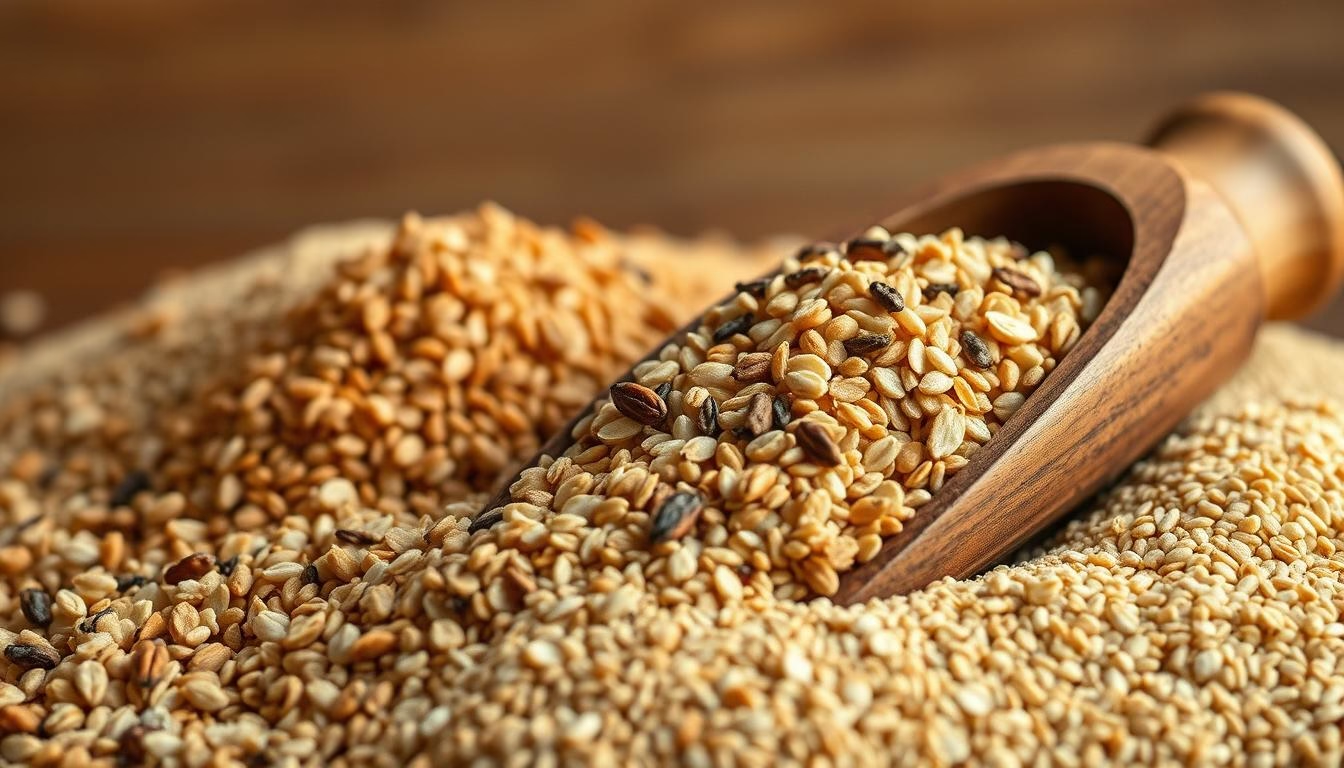
- 9.5 lb (4.3 kg) Pale 2-Row or Pale Ale malt (~65%)
- 3.0 lb (1.36 kg) Flaked oats (~20%)
- 1.5 lb (0.68 kg) Wheat malt (~10%)
- 0.5 lb (0.23 kg) Carafoam or dextrin malt (~5%)
Why this works:
- Base malt: Provides fermentable sugars and a clean backbone.
- Flaked oats: Add proteins and beta-glucans for haze and creaminess.
- Wheat malt: Supports haze and head retention.
- Carafoam/dextrin malt: Adds body without extra sweetness.
You can tweak percentages, but keep at least 25–35% combined oats + wheat for a proper hazy IPA.
Best Hazy IPA Home Brew Recipe Hop Schedule: Juicy, Not Bitter
The Best Hazy IPA Recipe Home Brew relies on late and cold-side hops rather than big bitter additions.
Choose 3–4 modern, fruity hop varieties:
- Citra (citrus, tropical fruit)
- Mosaic (blueberry, tropical, dank)
- Galaxy (passionfruit, peach)
- Amarillo (orange, floral)
- Simcoe (pine, citrus, berry)
Example hop schedule for 5 gallons (alpha acids around 12–15% for main hops):
Boil hops (low bitterness approach):
- 60 minutes: 0.25–0.35 oz (7–10 g) neutral bittering hop (e.g., Magnum, Warrior)
- This gives ~15–20 IBUs.
Whirlpool hops (post-boil, 170°F / 77°C):
- 2 oz (56 g) Citra
- 2 oz (56 g) Mosaic
- 1 oz (28 g) Galaxy
Whirlpool 20–30 minutes at ~170°F / 77°C to avoid excessive bitterness while extracting aroma and flavor.
Dry hop #1 (high krausen / day 2–3):
- 1.5 oz (42 g) Citra
- 1.5 oz (42 g) Mosaic
Dry hop #2 (after primary mostly done / day 5–7):
- 1.5 oz (42 g) Citra
- 1.5 oz (42 g) Galaxy
Total hop load: ~10–12 oz (280–340 g) for a big, juicy Best Hazy IPA Recipe Home Brew.
Avoid large early-boil additions to keep bitterness smooth and the focus on juicy aromatics.
Best Hazy IPA Home Brew Recipe – Yeast Selection: Haze-Friendly Strains
Use an English-style, low-flocculating ale yeast that produces fruity esters and stays in suspension. These strains are ideal for the Best Hazy IPA Recipe Home Brew:
- Wyeast 1318 – London Ale III
- White Labs WLP066 – London Fog
- Imperial Yeast A38 – Juice
- Dry alternative: Lallemand Verdant IPA or SafAle S-04 (more traditional, but still works)
Yeast target:
- Pitch rate: 1–2 packages (or a starter if using liquid yeast) for 5 gallons.
- Fermentation temperature: 66–70°F (19–21°C) for juicy flavor and good attenuation.
Best Hazy IPA Home Brew Recipe Step 1 – Clean And Sanitize (Critical For Safety)
Before anything else, protect yourself and your friends by making sanitation a habit before the Brew
- Clean
- Rinse all equipment to remove dust and visible debris.
- Use brewery-specific cleaner (PBW or similar) in warm water. Scrub surfaces that touch wort/beer.
- Rinse
- Thoroughly rinse away all cleaner. Residual cleaner can affect flavor and safety.
- Sanitize
- Mix a no-rinse sanitizer according to label instructions (never stronger than recommended).
- Soak or spray everything that will touch cooled wort or beer: fermenter, airlock, transfer tubing, bottling equipment, scissors for cutting yeast pack, etc.
- Let items drain; do not rinse off the sanitizer.
Best Hazy IPA Home Brew Recipe. Never skip sanitation. Unsanitized equipment can allow harmful microorganisms to grow and make the beer unsafe or undrinkable.
Step 2 – Mash Schedule
The mash converts starches from the grain into fermentable sugars for your Best Hazy IPA Recipe Home Brew.
- Heat strike water
- Use about 1.25–1.5 quarts of water per pound of grain (2.6–3.1 L/kg).
- Heat to around 163–166°F (73–74°C) so the mash rests at 152–154°F (67–68°C).
- Mash in
- Add crushed grains slowly, stirring to avoid dry pockets.
- Check temperature; adjust with small additions of hot or cold water to hold 152–154°F.
- Mash for 60 minutes.
- Mash pH (optional but helpful)
- Aim for a mash pH of ~5.2–5.4 at room temperature for best flavor and enzyme activity.
- Mash out and sparge
- Raise mash to ~168°F (76°C) for 10 minutes (optional but helpful for run-off).
- Vorlauf: Recirculate runnings until they look mostly clear (no big grain pieces).
- Sparge with 168°F (76°C) water until you collect enough wort for a 60-minute boil (usually ~6.5–7 gallons / 25–26.5 L pre-boil).
Step 3 – Boil And Whirlpool
The boil sanitizes the wort and helps achieve your target bitterness.
- Bring wort to a rolling boil (watch for boil-overs).
- 60-minute timer:
- At 60 minutes remaining, add your small bittering hop addition.
- With 10–15 minutes left, add yeast nutrient and whirlfloc/Irish moss if desired (for some haziness control but not clarity).
- Flame out and whirlpool
- After 60 minutes, turn off heat and cool wort down to about 170°F / 77°C.
- Add whirlpool hops and gently stir or recirculate for 20–30 minutes.
- Keep the temperature near 160–170°F, not boiling. This extracts oils without harsh bitterness.
Avoid breathing in hot steam directly and handle the kettle carefully to prevent burns.
Step 4 – Chill, Transfer, And Oxygen
Cooling quickly and cleanly is crucial for the Best Hazy IPA Recipe Home Brew.
- Chill the wort
- Use a sanitized immersion chiller or plate/counterflow chiller.
- Chill to 66–68°F (19–20°C) as quickly as possible to reduce contamination risk and improve beer quality.
- Sanitary transfer
- After cooling, whirlpool briefly to settle trub (optional) and let it rest for 10–15 minutes.
- Transfer clear-ish wort to your sanitized fermenter, leaving most trub behind.
- Oxygenate
- Before pitching yeast, aerate by shaking the fermenter for 1–2 minutes or using a sanitized oxygen stone. Yeast need oxygen at this point only.
Avoid touching the inside of hoses, fermenter, or any part that will contact the wort. Keep everything sanitized from now on.
Step 5 – Pitch Yeast And Ferment
Fermentation is where your Best Hazy IPA Recipe Home Brew becomes real beer.
- Pitch yeast
- Sanitize the yeast pack and scissors, then open and pour into the cooled wort.
- Seal fermenter with an airlock or blow-off tube.
- Fermentation temperature
- Keep temperature around 66–70°F (19–21°C) for the first 3–5 days.
- A steady temperature is better than big swings.
- Fermentation timeline
- Visible activity (bubbling) should start within 12–36 hours.
- Primary fermentation usually finishes in 5–7 days, but leave the beer on the yeast a bit longer for cleanup.
If fermentation does not start within 48 hours, double-check temperature, gravity, and yeast freshness. A stuck fermentation can lead to contamination if left too long.
Step 6 – Dry Hopping For Big Aroma
Dry hopping is essential for the Best Hazy IPA Recipe Home Brew and must be done cleanly to avoid infections and oxidation.
- First dry hop (high krausen / day 2–3)
- When fermentation is active and krausen is still visible, sanitize your hop bag (if using), scissors, and anything that will touch hops.
- Add the first dry-hop charge directly to the fermenter. The CO₂ coming off fermentation helps protect against oxygen.
- Second dry hop (day 5–7)
- When fermentation slows and gravity is within a few points of the target FG, add the second dry-hop charge.
- Again, sanitize everything. Minimize splashing or stirring to avoid oxygen exposure.
- Contact time
- Let hops steep for 3–5 days, but not much longer than 7–10 days to avoid grassy flavors.
- Total fermentation + dry hop time: about 10–14 days.
Keep the fermenter closed as much as possible. Every time you open it, you risk oxygen and microbes getting in.
Step 7 – Check Gravity And Cold Crash
- Check final gravity
- Sanitize your thief or turkey baster.
- Take a small sample and measure with a hydrometer.
- Confirm stable readings over 2 days (e.g., 1.014–1.018).
- Cold crash (optional but helpful)
- If you can, cool the fermenter to 34–38°F (1–3°C) for 24–48 hours.
- This helps hop debris and extra yeast settle while keeping a good haze.
Avoid letting air get sucked into the fermenter during cold crash. If possible, attach sanitized CO₂ or use a loose plastic wrap over the airlock area to minimize oxygen ingress.
Step 8 – Packaging: Bottling Or Kegging
Bottling
- Prepare priming sugar
- For 5 gallons, boil ~3.8 oz (108 g) of corn sugar (dextrose) in a cup of water for 5 minutes, then cool.
- This targets carbonation around 2.4–2.6 volumes CO₂, ideal for hazy IPA.
- Sanitize bottling equipment
- Bottling bucket, tubing, bottling wand, bottles, and caps must all be sanitized.
- Transfer beer
- Gently siphon beer from fermenter into the bottling bucket, placing the hose under the surface to reduce splashing.
- Stir in the cooled priming sugar solution gently and evenly.
- Fill and cap
- Fill each bottle, leaving about 1–1.5 inches (2–3 cm) headspace.
- Cap securely with sanitized caps.
- Condition
- Store bottles at 68–72°F (20–22°C) for 10–14 days to carbonate.
- Then chill at least 24 hours before drinking.
Kegging
- Sanitize keg, lid, posts, and lines.
- Transfer beer via siphon or closed transfer, minimizing oxygen contact.
- Seal and force carbonate to ~12–15 psi at 38°F (3°C) over a few days, or burst-carb if you prefer.
Never package beer that still tastes or smells obviously sour, rotten, or heavily solvent-like (nail polish remover). These can be signs of infection or off fermentation. When in doubt, do not serve it.
Step 9 – Tasting And Sharing Your Best Hazy IPA Home Brew Recipe Results – You Can Share If You Like
After conditioning, your Best Hazy IPA Recipe Home Brew should pour:
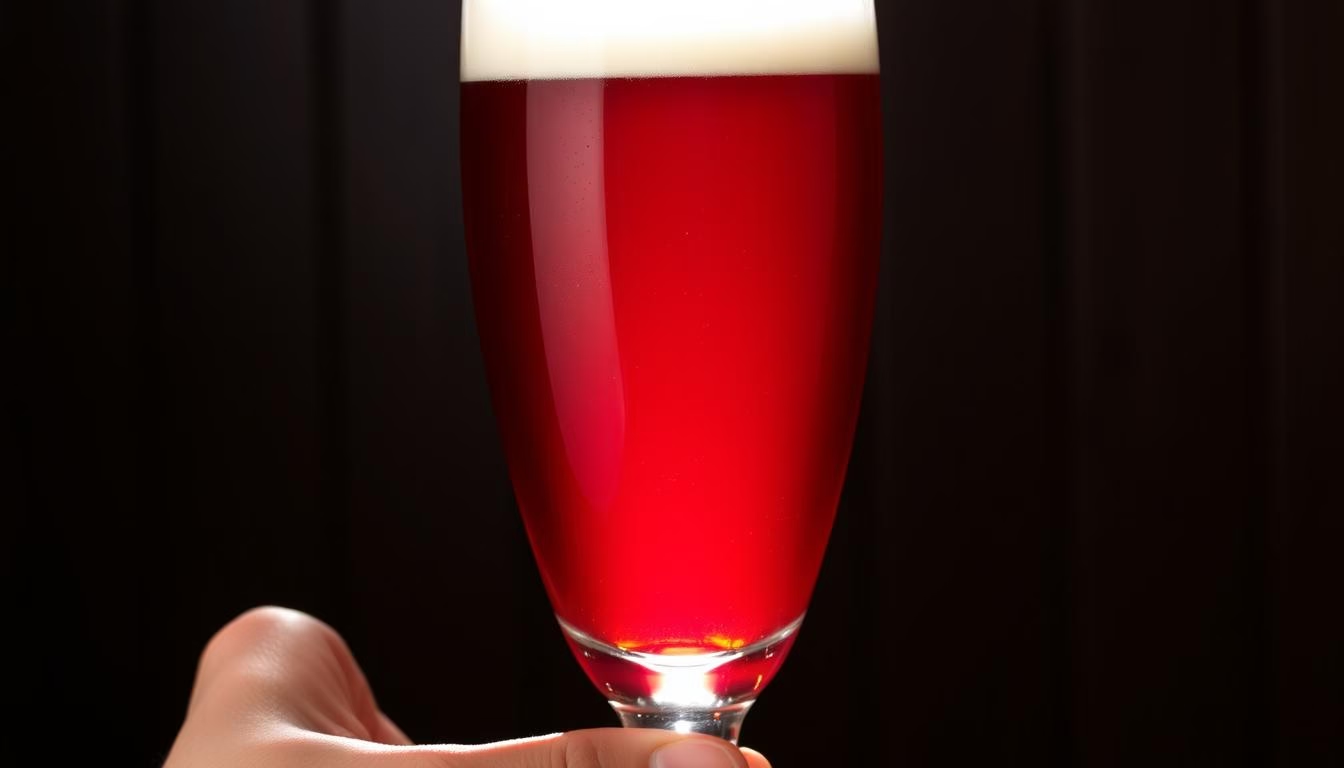
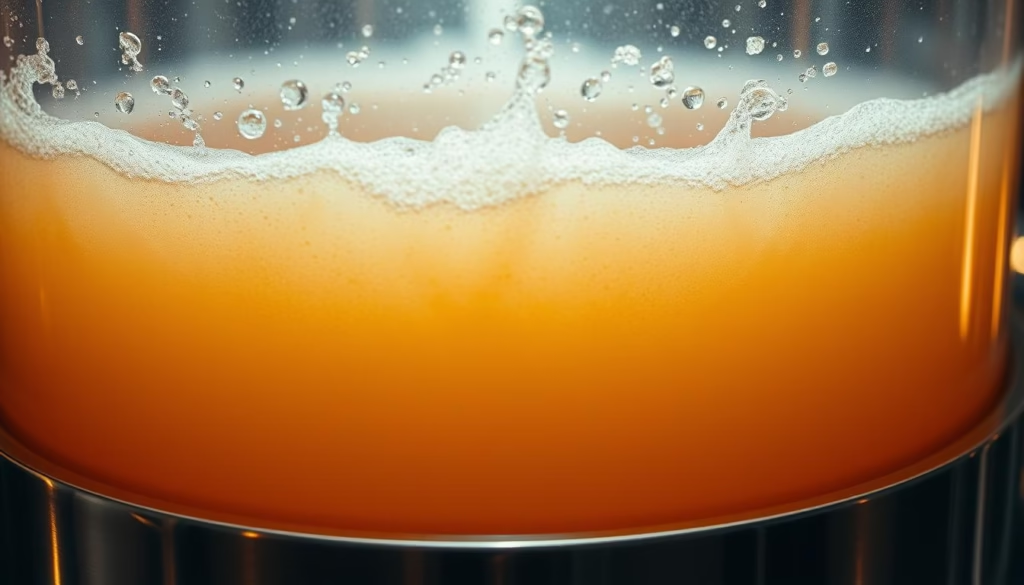
- Appearance: Opaque, hazy gold to light orange, with a creamy white head.
- Aroma: Intense tropical and citrus aroma—mango, orange, passionfruit, pine.
- Flavor: Soft bitterness, juicy hop flavor, low harshness, subtle malt sweetness.
- Mouthfeel: Medium to full, smooth and creamy, low astringency.
Serve in a clean glass at ~45–50°F (7–10°C) to showcase aroma and haze. Enjoy with friends, but always serve responsibly and remind everyone that home-brewed beer is alcoholic and should be enjoyed in moderation.
Simple Variations On The Base Recipe
Once you’ve brewed this Best Hazy IPA Recipe Home Brew once, try:
- Hop swaps: Use Nelson Sauvin, Motueka, or Riwaka for white wine and lime notes.
- Lower ABV “hazy pale”: Reduce base malt to target OG ~1.054 for a 5.5% beer.
- Fruit twist: Add a small fruit puree addition in secondary (mango, passionfruit), but be extra strict with sanitation and allow fermentation to finish again before packaging.
Encouragement To Brew Your First Batch
If this is your first Best Hazy IPA Recipe Home Brew, it might feel like a lot of steps, but each one is manageable if you go slowly and stay clean and organized. You’ll learn most by brewing, tasting, and taking notes on what you’d tweak next time. Once you pour that first glass of your own juicy, hazy IPA and share it with friends, you’ll see why this style is perfect for homebrewers who love aroma-packed, soft, and cloudy beer.