I still remember the first time I watched grain turn into something that smelled like possibility. You stand over a steaming mash, nervous but curious, and the process suddenly feels like a promise you can keep.
I wrote this guide because I want you to feel confident on that first full brew day. You’ll get a clear map—from crushed grain and mash temperatures to a vigorous boil and gravity checks that protect flavor.
This section breaks down the brewing process in plain terms so a home brewer can learn fast. We explain what happens, where it happens, and why it matters—without hiding the science.
By the end you’ll know the main types of setups, simple upgrades that pay off, and practical ways to avoid common pitfalls. Think of this as a friendly, expert hand guiding you from that first crush to a confident pour.
Key Takeaways
- You’ll follow a step-by-step map of the brewing process to make beer at home with confidence.
- Key stages—mash, lautering, boil, cooling, and fermentation—affect body, aroma, and bitterness.
- Simple tools and tight temperature control improve results more than fancy gear.
- Gravity readings and a solid boil help avoid off-flavors and ensure consistency.
- Choose the right types and methods for your goals—extract brewing and all-grain both have clear uses.
Understanding the Brewing Process from Grain to Glass
Start to finish, this process turns grain, water, and hops into fermentable wort.
From malt to mash: Mill the malt to expose starches. Mix the grist with warm water in a mash vessel and hold rests between 100–170°F. Enzymes then convert starch into fermentable sugars in about 1–2 hours.
The lautering phase separates sweet wort from the grain bed. Raise to ~170°F for mashout, recirculate until clear, then sparge to rinse remaining sugars. Clean wort is your foundation for flavor and efficiency.
Boil to package
Boil 60–120 minutes to sanitize and concentrate wort. Add hops early for bitterness, mid for flavor, and late for aroma. Whirlpool to settle trub; a hop back or similar addition can boost fresh hop character.
Chill quickly with proper equipment, pitch yeast at the right temperature, and ferment—ales around 60–68°F, lagers nearer 50°F. Condition by dry hopping or maturation, then package by force carbonation or bottle conditioning.
- Take an OG reading before yeast and FG after to calculate ABV.
- Track temperature, gravity, and time at each phase for repeatable results.
| Phase | Key Target | Typical Time | Primary Goal |
|---|---|---|---|
| Milling & Mash | 100–170°F | 60–120 min | Convert starches to sugars |
| Lauter & Sparge | Mashout ~170°F | 15–45 min | Clarify and recover wort |
| Boil & Whirlpool | Rolling boil | 60–120 min | Sanitize, isomerize hops, settle trub |
| Ferment & Package | Ales 60–68°F, Lagers ~50°F | 1–6+ weeks | Yeast converts sugars; condition and carbonate |
Water, Malt, and Mash Fundamentals
Good water, the right malt, and a smart mash set the tone for every successful batch.
Choosing your grist bill starts with a base barley malt. Layer in wheat, oats, or rye to tweak body, head retention, and flavor while keeping the beer’s style in mind.
Malted grains are kilned or roasted—lighter malts yield more fermentable sugars, darker malts add color and complexity but fewer sugars. Balance makes the difference.
Infusion vs. decoction mashing
Infusion mashing heats in one vessel. It is simple and gives steady enzyme activity to convert starches into sugars.
Decoction pulls a portion of the mash, boils it, then returns it. That extra boil adds Maillard richness and can deepen malt character—some brewers do double or triple decoctions for even more depth.
Cereal mash basics
Raw grains like corn or rice need a cereal mash. Pre-cooking gelatinizes stubborn starches so the main mash enzymes can convert them to sugars.
- Control temperature: rests between 100–170°F activate different enzymes—lower rests favor fermentable wort, higher rests build body.
- Watch mash pH and water chemistry—minerals affect enzyme performance, mouthfeel, and hop perception.
- Plan time: most rests finish in 60–90 minutes; decoctions and cereal mashes add steps, so organize your workflow.
| Topic | When to use | Key effect |
|---|---|---|
| Base barley malt | All-grain and partial mash | Provides fermentable sugars and backbone |
| Wheat / Oats / Rye | Adjusts style and mouthfeel | Boosts head retention, haze, and texture |
| Infusion mashing | Simple setups, single rest | Predictable enzyme conversion |
| Decoction mashing | When you want richer malt character | Enhances malt complexity and color |
Beer Brewing Techniques: Extract, Partial Mash, and All-Grain
Pick the method that fits your schedule and space—each path to wort has clear pros and trade-offs.
Extract brewing uses concentrated malt syrup or powder dissolved in hot water to form wort, then you boil with hops, chill, and pitch yeast. It is fast, consistent, and perfect when you want to make beer quickly at home.
Partial mash for more flavor with less gear
Partial mash combines 2–5 lb of crushed grains with extract. You get extra color, body, and nuance while keeping equipment light.
Aim for a proper mash temperature to convert starches to sugars—treat it like a mini all-grain step for reliable results.
All-grain and BIAB for full control
All-grain means you mill and mash all your grain, then lauter to collect wort. This gives you the most control over fermentability and profile.
BIAB (Brew In A Bag) offers a simple all-grain option—one vessel and a mesh bag let you mash and lift without a three-vessel system.
- Choose extract when speed and consistency matter; watch boil volume and late additions to hit gravity without darkening the wort.
- Partial mash expands flavor with minimal extra equipment.
- All-grain rewards attention to crush, mash pH, and lautering for predictable fermentations.
- Record pre-fermentation gravity and process notes—good data makes repeatable batches.
| Method | Equipment Footprint | Main Advantage | Key Watchpoints |
|---|---|---|---|
| Extract | Minimal (kettle, fermenter) | Fast, repeatable wort | Boil volume, late extract additions, color |
| Partial Mash | Modest (small mash vessel + kettle) | Better flavor control with light gear | Mash temp, conversion, specialty grains |
| All-Grain / BIAB | Full (mash tun or BIAB setup) | Total control over wort composition | Crush consistency, mash pH, lautering efficiency |
Lautering and Sparging for Clear, Efficient Wort
A calm, controlled runoff helps you capture sugars without dragging in grain debris. Lautering separates your sweet liquid from the spent grain so the kettle gets bright wort for a clean boil.
Mashout and recirculation: Raise the mash to about 170°F to stop enzyme activity and lower viscosity. Recirculate slowly at first—this sets the grain bed as a natural filter and clears the wort before you collect it.
Mashout, recirculation, and sparging best practices
Sparge with steady, hot water to rinse remaining sugars without compacting the bed. Keep flow even to avoid channeling. Watch pH during sparging to avoid harsh tannins from husks.
Equipment options and grain bed management
Choose the right vessel for your scale: a classic lauter tun with a slotted false bottom or a mash filter for higher throughput and clarity. Clean as you go—compacted beds and dead spots cost time and consistency.
- If flow stalls, try a gentle stir or slower pump rate to fix a stuck runoff.
- Use run-off color and clarity as feedback to refine your set-up and routine.
- Save spent grain for animal feed or baking—it’s a good reuse of solids.
Why it matters: Good lautering supports healthy fermentation and reduces off-flavors later in the beer. Practice with your equipment, note the process, and you’ll improve efficiency and clarity with each batch.
Boiling, Hops Scheduling, and Aroma Strategies
The boil is where sanitation, chemistry, and hop strategy meet to define your final aroma and bite.
Run a full boil. Typical boils last 60–120 minutes to sterilize wort and drive alpha-acid isomerization for steady bitterness. Shorter boils risk residual DMS—watch volume and vigor, especially for lighter styles.
Bittering, flavor, and late additions
Place early additions for firm bitterness, mid-boil for rounded flavor, and late or flame-out charges to lock in volatile oils and bright aroma. Time each hop charge with intent—that’s how you sculpt balance.
Whirlpooling and hop backs
Whirlpool after flame-out to gather trub in a cone and clear wort for a clean transfer. A hop back with whole cones can filter bits while adding intense scent without vegetal grit.
Dry hop timing and handling
Plan dry hop additions during active fermentation for biotransformation-led fruitiness, or add them post-fermentation for a pure, saturated nose. Control temperature and contact time to avoid grassy off-notes.
- Control boil vigor and volume to hit target gravity and avoid off-flavors.
- Adjust whirlpool temperature—cooler to preserve fragile oils, hotter to extract more quickly.
- Record hop schedule, time, and sensory notes so future brews match your intent.
Rapid Cooling, Yeast Pitching, and Fermentation Control
After the whirlpool, speed and preparation matter most. Chill your wort quickly with an immersion, counterflow, or plate chiller to reduce infection risk and preserve bright flavor.
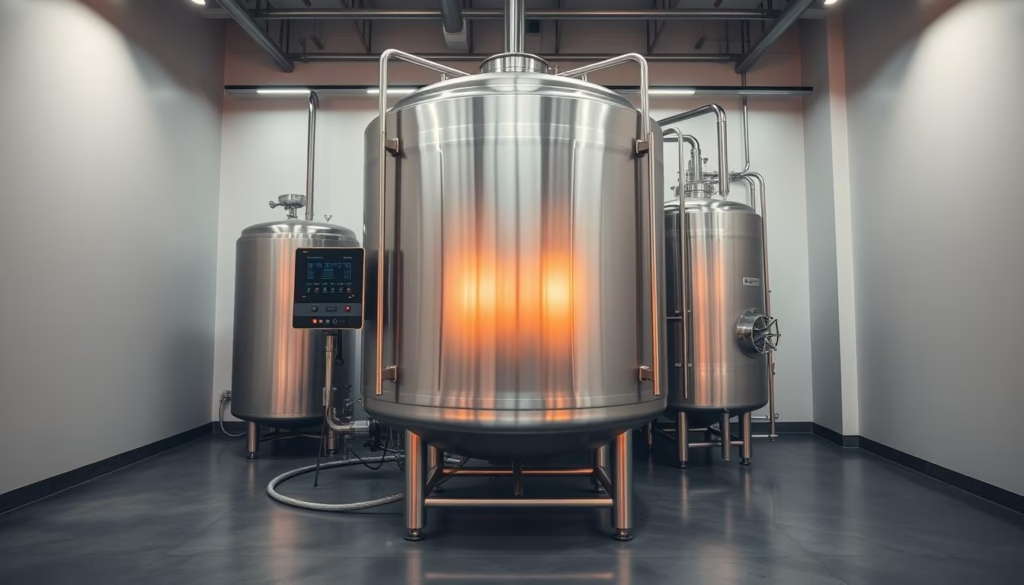
Aerate before you pitch. Oxygen helps yeast grow during the early fermentation phase. Use splashing, a sterile air stone, or pure oxygen to give cells what they need.
Prep your yeast correctly. Hydrate dry yeast per the maker’s instructions or build a starter for liquid strains to reach healthy cell counts. Proper pitching reduces lag and off-flavor risk.
Temperature and equipment
Target temps: ales at 60–68°F, lagers near 50°F. Stable temperature control avoids fusel alcohols and stalled fermentations.
Use reliable equipment—a ferm chamber, temp controller, and a blow-off assembly—to manage krausen and keep conditions steady. Track gravity during the first days to confirm active fermentation.
- Guard against DMS: ensure a vigorous boil and fast chill.
- Expect rapid activity in 48–72 hours, then a slower conditioning phase—patience pays off.
- Keep your home setup clean; sanitation at this phase saves months of work.
Conditioning, Carbonation, and Packaging Options
Think of conditioning as the finishing school for your beer—time and temperature teach it to shine.
Why condition? Conditioning smooths flavors, lets yeast clean up off-notes, and clarifies the brew before you package. Cold storage for lagers—about 30 days—is typical to get that crisp, brilliant profile many styles require.
Lagering, kräusening, and clarifying for polished beers
Hold cooler temps to encourage haze to drop and yeast to finish residual sugars. A bright tank or cold crash helps settle solids and makes fills cleaner.
Kräusening—adding active fermenting wort—can naturally carbonate and reduce diacetyl without extra priming sugar, while keeping flavor impact minimal.
Bottle conditioning vs. force carbonation in kegs
Bottle conditioning uses a measured sugar dose with yeast to create natural carbonation and classic mouthfeel. Document priming calculations carefully—temperature and residual CO2 matter.
Force carbonation in kegs uses CO2 pressure for speed and consistent volumes. Use a regulator and proper kegs to dial in desired carbonation without oxygen exposure.
- Decide where to dry hop: late conditioning in a closed vessel protects aroma and limits oxygen pickup.
- Match your vessel and process—bright tanks, kegs, or bottles—based on scale and workflow.
- Use equipment like CO2 regulators, bottling wands, and racking trunks to keep transfers low-oxygen and repeatable.
Measurements That Matter: Gravity, pH, and ABV
Simple readings give you real control over mash efficiency, fermentation, and final alcohol. Readings turn impressions into numbers you can act on. Take them at key moments and record temperature with each entry.
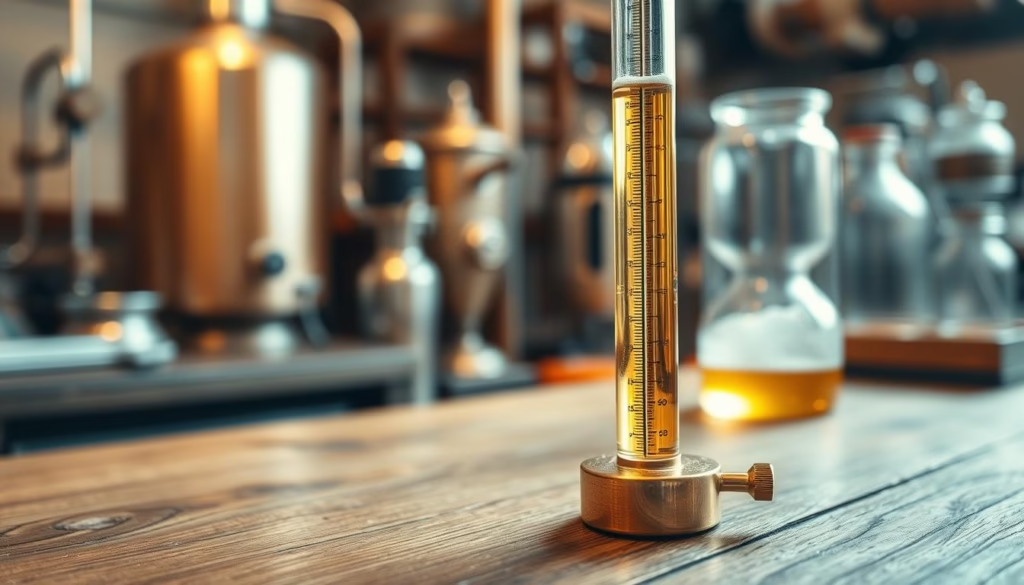
Using hydrometers and refractometers
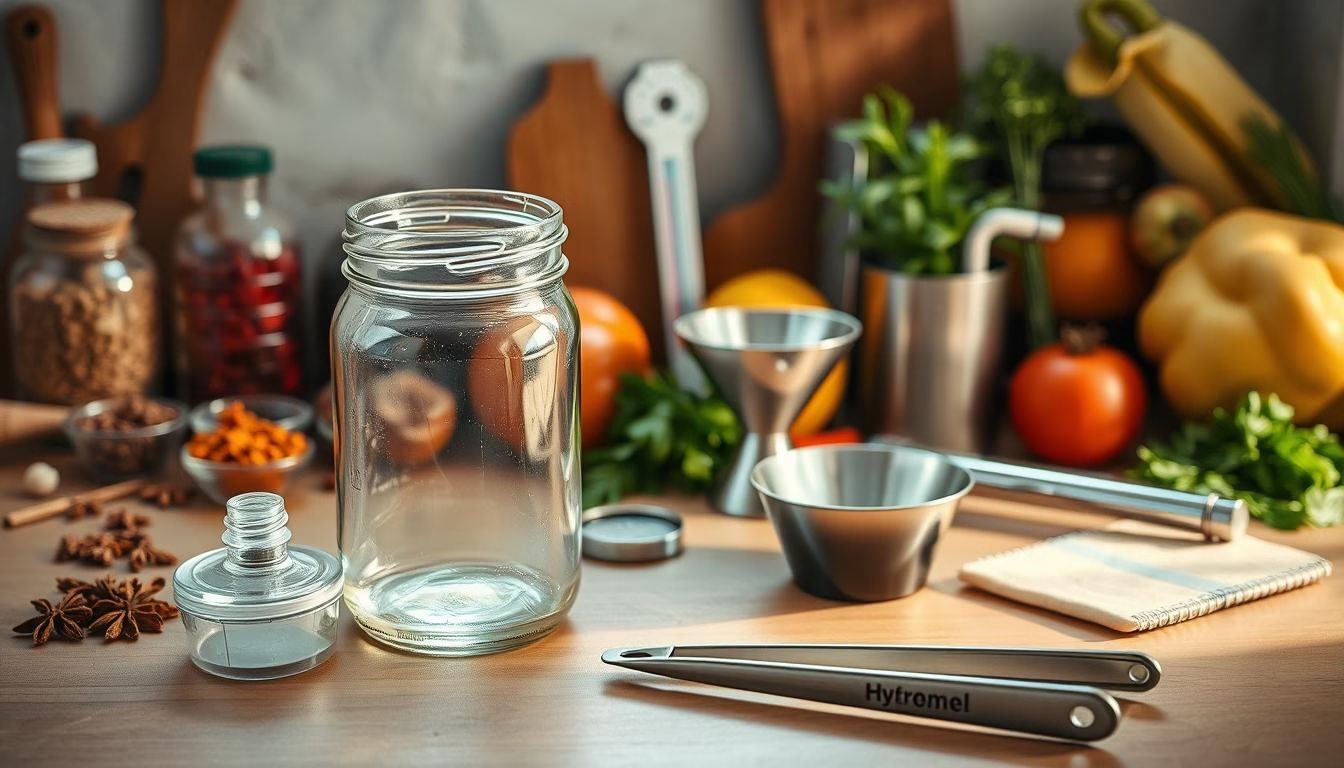
Hydrometers measure specific gravity directly. Take an OG before you pitch yeast and an FG when fermentation finishes. Those two numbers let you calculate ABV easily.
Refractometers are quick and need only a drop. They read Brix or SG but require an alcohol correction after fermentation. Always correct for temperature and alcohol when you convert Brix to SG.
pH, ABV math, and practical checks
Track mash pH to keep enzymes happy and conversion efficient. Monitor pH again during fermentation to check yeast health.
- Log OG and FG with temperature for accurate ABV math.
- Use corrected refractometer values post-fermentation.
- Keep tools clean and calibrated—test with distilled water before brew day.
| Measure | When | Why |
|---|---|---|
| OG | Before yeast pitch | Predicts potential alcohol |
| FG | After fermentation | Confirms attenuation and ABV |
| pH | Mash & active fermentation | Controls enzyme activity and yeast health |
Watch gravity over time to decide rests, dry hop timing, or a diacetyl rest. Steady, repeatable numbers help brewers improve each batch and make a predictable, delicious beer every time.
Essential Equipment for Home and Small Breweries in the United States
Choosing the right vessels and tools sets the stage for every successful batch.
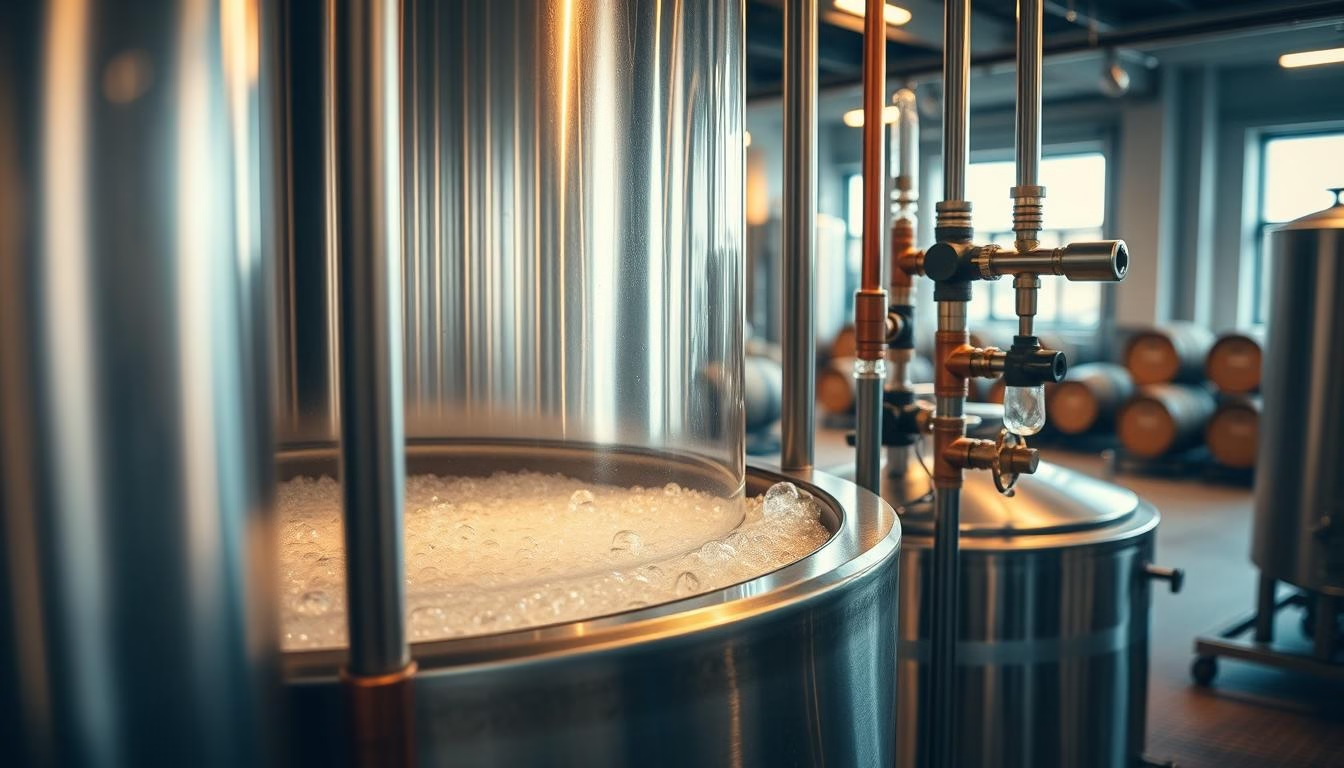
Build your core system around durable vessels: a quality kettle, a mash tun, a lauter tun (or combo), fermentation tanks, and a bright tank for final polishing.
Kettles, mash tuns, lauter tuns, fermenters, and bright tanks
Size gear to your volume and place. Home setups prefer compact kits; small breweries often step up to 2–4 vessel brewhouses for higher throughput.
Conical fermenters, blow-off assemblies, temperature control, and sanitation
Conical fermenters make yeast harvesting and trub removal easy and reduce oxygen exposure during transfers. Blow-off assemblies protect your space during vigorous fermentation.
Wort chillers—immersion for simplicity, counterflow or plate for speed—pair with temperature controllers to lock in consistent fermentation profiles.
- Stock measurement tools: hydrometers, refractometers, and aeration stones.
- Prioritize cleaning routines—sanitation matters as much as shiny tanks.
- Consider turnkey suppliers (US vendors and manufacturers) when you plan growth or decoction-capable systems.
| Core Vessel | Main Benefit | Best For |
|---|---|---|
| Kettle | Boil & volume control | All setups |
| Conical fermenter | Yeast harvest & closed transfer | Small brewery |
| Bright tank | Polish & package-ready | Higher consistency |
Conclusion
Every step from mash to package shapes the final flavor, so treat each moment as intentional.
You now have a clear process map—from malt selection and mashing to lautering, hop timing, whirlpooling, rapid cooling, controlled fermentation, conditioning, and packaging. OG and FG readings tell you alcohol and progress. Ales like 60–68°F and lagers nearer 50°F; a solid boil plus quick chill helps avoid DMS.
Focus on fundamentals: clean equipment, steady water and temperature control, and healthy yeast. Try small experiments, log readings, and protect the wort at each transfer.
There are many ways to brew, but the best path is the one you repeat. Enjoy the craft—practice makes better batches, and your next brew can be your best yet.
FAQ
What’s the basic flow of the process from grain to glass?
Start with malted grain, crush it, then mash to extract sugars into wort. Lauter and sparge to collect clear wort, boil with hops, cool rapidly, pitch yeast, ferment, condition, carbonate, and package.
How do I create a fermentable wort during the mash?
Hold crushed malt in water at controlled temperatures to activate enzymes that break starches into sugars. Rest times and temps determine fermentability and body—lower temps give fuller body, higher temps give drier wort.
What happens during the boil, whirlpool, ferment, condition, and package stages?
Boil sanitizes and isomerizes hop alpha acids. Whirlpool separates trub and concentrates hop aroma. Fermentation converts sugars to alcohol and CO2. Conditioning matures flavors and clears the liquid. Finally, package into bottles or kegs with proper carbonation.
How do I choose grains for a recipe—barley, wheat, oats, or rye?
Base malt (two-row or six-row barley) provides most enzymes and fermentables. Wheat adds haze and protein for head; oats add silky mouthfeel; rye gives spice. Balance base and specialty malts to hit color, body, and flavor goals.
What’s the difference between infusion and decoction mashing?
Infusion mashing raises mash temp by adding hot water—simple and common. Decoction removes part of the mash, boils it, then returns it to raise temp—this deepens malt character and was used historically with less-modified malts.
When should I use a cereal mash for adjuncts like corn or rice?
Use cereal mash when you include raw starches that lack enzymes. Cook the adjunct to gelatinize starches, then mash with enzyme-active base malt so those starches convert to fermentable sugars.
What are the practical differences between extract, partial mash, and all-grain methods?
Extract brewing uses malt extract for simplicity and speed. Partial mash blends extract with some mashing to add complexity. All-grain gives full control over grist and efficiency but needs more equipment and time.
Is BIAB a viable all-grain option for small setups?
Yes—Brew In A Bag (BIAB) uses a single vessel and a grain bag for the mash. It reduces equipment needs and simplifies lautering, while still offering full-grain control over wort composition.
What are best practices for lautering and sparging to get clear, efficient wort?
Aim for a settled grain bed, gentle recirculation (vorlauf) until clear, and controlled sparge water temperature to avoid extracting tannins. Stop sparging when gravity drops or you reach target volume.
Which equipment options help manage the grain bed—lauter tun, mash filter, or others?
A lauter tun with a false bottom is common for home setups. Mash filters and lauter plates improve clarity and efficiency in professional systems. Grain bed management—even grain crush and proper recirculation—matters most.
How do I schedule hops for bitterness, flavor, and aroma?
Add bittering hops early in the boil for alpha acid utilization. Add mid-boil for flavor and late in the boil or whirlpool for aroma. Time and alpha acid percentage determine final bitterness and character.
What’s the role of whirlpooling and hop backs?
Whirlpooling gathers trub and hop particles in the kettle center to clarify wort and increase hop aroma extraction without extended high-temperature exposure. Hop backs pass hot wort through fresh hops for intense aroma in some breweries.
When should I dry hop—during fermentation or conditioning?
Dry hopping during active fermentation can enhance hop utilization and reduce oxygen exposure. Dry hopping after fermentation preserves delicate aromatics but requires careful temp control to avoid biotransformation or grassy notes.
What methods chill wort quickly—immersion, counterflow, or plate chillers?
Immersion chillers are simple and affordable. Counterflow and plate chillers cool faster and reduce exposure time to oxygen. Faster chilling improves clarity and minimizes off-flavor formation like DMS.
How should I prepare yeast—rehydrate dry yeast or make a starter for liquid strains?
Rehydrate most dry yeasts per manufacturer instructions to restore viability. Make a starter for liquid strains or high-gravity batches to build cell count and ensure healthy fermentation.
What temperature ranges work for ales and lagers, and how do I avoid off-flavors like DMS?
Ales ferment comfortably around 65–72°F; lagers need 48–55°F. Rapid chilling, vigorous boil, and good wort aeration help prevent DMS. Keep fermentation temps steady to avoid esters and fusel alcohols.
How do conditioning, lagering, and kräusening affect finished character?
Conditioning allows flavors to meld and harsh compounds to drop out. Lagering at cold temps clarifies and smooths profiles. Kräusening (adding actively fermenting wort) helps natural carbonation and cleans up off-flavors.
When should I bottle condition vs. force carbonate in a keg?
Bottle conditioning is simple and portable—yeast carbonates naturally over weeks. Force carbonation in kegs is faster, more controllable, and better for serving consistency in home taps or small venues.
How do I use hydrometers and refractometers to read OG and FG?
Measure original gravity (OG) before fermentation and final gravity (FG) after. Hydrometers read specific gravity directly. Refractometers need correction after fermentation because alcohol affects readings—use conversion formulas.
How do I calculate ABV and why monitor pH during mash and fermentation?
ABV is estimated from OG and FG values—the difference indicates alcohol produced. Monitor pH because mash pH affects enzyme efficiency and extraction; fermentation pH impacts yeast health and flavor stability.
What essential equipment should a U.S. home or small brewery consider first?
Start with a sturdy kettle, fermenter (glass or stainless conical), basic temperature control, sanitization tools, and a reliable heat source. Add a mash tun or BIAB bag for all-grain, and consider a plate chiller for quick cooling.
What sanitation practices matter most to avoid contamination?
Clean first, then sanitize surfaces and gear that contact cooled wort or fermenting liquid. Use no-rinse sanitizers like Star San, avoid cross-contamination, and keep open fermentation times short to reduce infection risk.
How can I improve extraction efficiency and overall yield?
Optimize crush consistency, maintain proper mash temps and times, ensure good mash-water ratio, and perform effective lautering and sparging. Equipment upgrades—better pumps, recirculation, and heat control—also boost efficiency.