
I remember the first time I chased a hazy pour that felt like sunshine in a glass. After years of trial, I learned that a great Hazy IPA is part art, part lab work—each choice matters.
You’ll get a clear path to make beer at home that mirrors what small breweries use today. I spent years dialing a pastel-yellow haze, a soft mouthfeel (FG 1.015–1.020), and big late hops without high IBUs.
The plan focuses on water profile (Ca 100, Mg 18, Na 16, Cl 186, SO4 93), English ale yeast, a 180°F whirlpool for 20 minutes, and dry hopping after fermentation. You’ll also learn soft-crash techniques, zero-oxygen transfers, and keg-first packaging to keep your beer bright.
Key Takeaways
- Follow a brewery-style workflow to make beer that repeats reliably.
- Water and chloride-to-sulfate profile shape mouthfeel and hop expression.
- Late hopping and controlled whirlpool temperatures add big aroma without excessive bitterness.
- Small fermentation and transfer moves—yeast health, oxygen control—avoid off-flavors.
- One solid recipe can become a lot of variants if you control the core process.
Why “Best” Means Nailing Style and Process Today
Get the process right and the style follows. Brewing a New England IPA is less about throwing ingredients together and more about aligning every step so the final beer matches your intent.
Start with a lighter base—pale malt plus pilsner—to hit that soft body target (FG 1.015–1.020). Use cheater hops like Citra, Galaxy, Nelson, or Mosaic for bold aroma without a bitter bite.
Temperature matters: a 180°F whirlpool for 20 minutes extracts aroma without harsh tannins. Dry hop after fermentation to protect volatile oils and limit hop creep.
Water and timing are as critical as grain and hop choices. Tight chloride-to-sulfate balance and controlled whirlpool temps shape mouthfeel and hop perception.
Readings from books such as The New IPA steer evidence-based choices—hop timing, yeast selection, and oxygen control matter. One consistent process over years gives you a baseline to tweak recipes, try a lager spin, or explore other beer styles without losing control.
- Style is the target; brewing is the method.
- Ingredients are simple; sequencing and control create the outcome.
- Repeatability yields true improvement.
best homebrew recipes
Start simple—a tight base malt lets late hops and careful cold-side handling define the finished IPA.
Look to north stars like Tree House Julius and WeldWerks Juicy Bits for aroma targets while following a clear process you can repeat on your system.
We include a modern IPA template that uses a focused grain bill, big late hops, and strict whirlpool and dry hop timing. That path gives juicy character while keeping the finish clean.
The Marshall Schott–inspired version shows a different approach: kettle bitterness and a richer malt backbone for clarity and snap. Both options work on typical home equipment and scale well from a 5-gallon batch.
- Modular design: swap hops or tweak the grist without breaking the core profile.
- Process guardrails: whirlpool temp, dry hop timing, and cold-side care protect aroma and freshness.
- Notes on water, fermentor size, and ambient temps help you adjust to your setup and keep each version consistent.
What Makes a Great New England IPA at Home
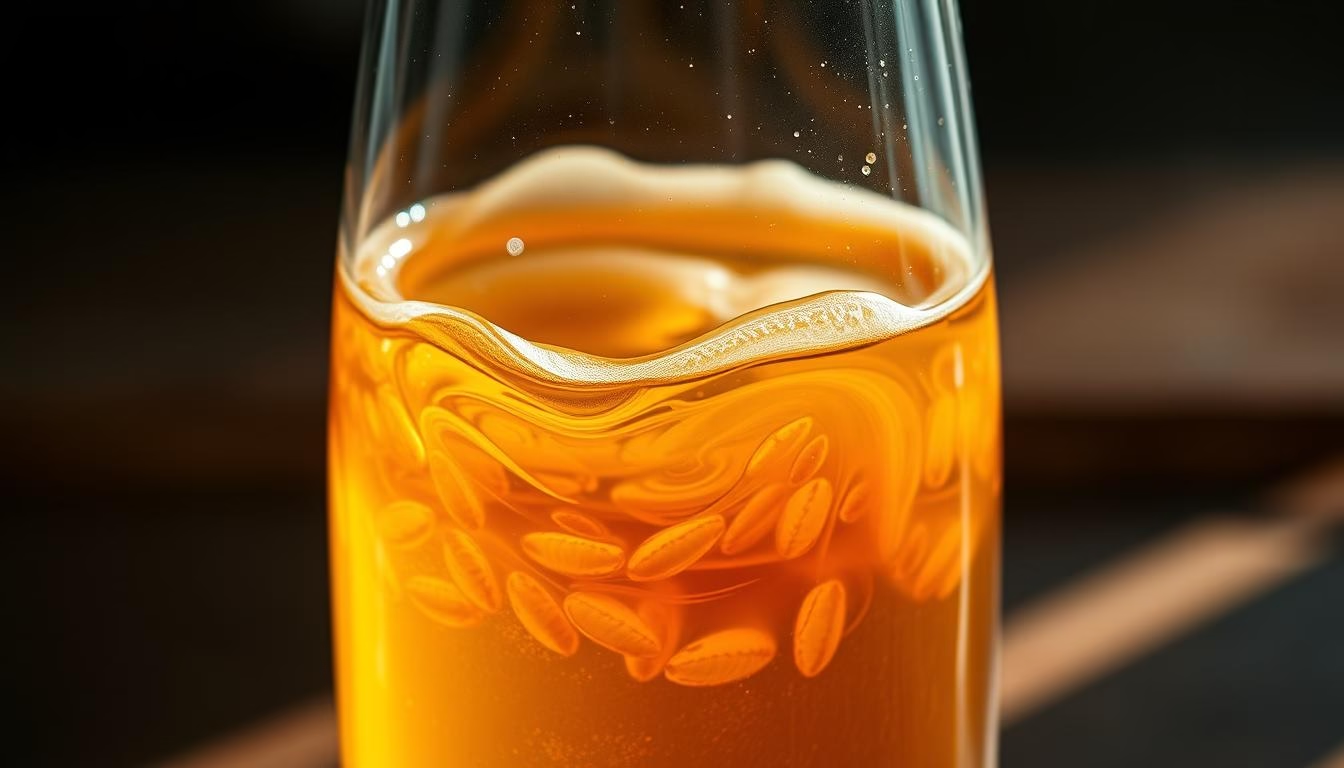
Start with the look you want. Color should sit between pastel-yellow and orange-juice-like. That visual target comes from a lighter malt mix and careful cold-side work.
Look and mouthfeel
Aim for haze from protein-hop interactions, not suspended yeast. Use more pilsner relative to pale malt to keep the color light. Balance flaked adjuncts so the body stays soft.
Target a final gravity of 1.015–1.020. That FG gives sweetness and viscosity—enough to hold saturated hop character without drying out.
Flavor and aroma
Think “mimosa” on the palate—bright citrus, tropical notes, and a gentle sparkle from carbonation. Achieve this with large late and cold hop charges while avoiding early bittering additions.
- Soft perceived bitterness: prioritize post-boil and dry hop additions.
- Yeast matters: select an English ale strain for fruity esters that layer with hop aroma.
- Temperature control keeps the beer clean—too warm gives fusel notes that fight juiciness.
Balance grain protein with hop load so the haze and mouthfeel work together. The right grain bill, controlled temperature, and timely hops create a home version that mirrors cans you love.
Building the Perfect Grain Bill for Hazy IPA
Start your grain plan around a pale, neutral base and let hops and yeast paint the rest. This keeps color low and gives you a clean canvas for juicy aromas.
Base malts
Base malts: balancing pale malt and pilsner for lighter color
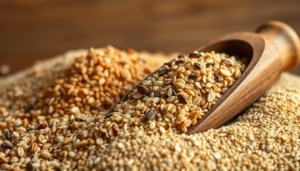
Use a blend of pale malt (2-row) and pilsner as your foundation. Aim for about 65% of the grist from these two to keep the beer light and nuanced.
A 50/50 split is a handy starting point on many systems. Avoid Pale Ale, Vienna, and Munich malts—they darken the beer and add malt-forward notes that compete with hop character.
Adjunct grains
Adjunct grains: flaked oats and wheat for body and haze
Add roughly 30% flaked adjuncts—oats and wheat—for silk and haze stability. Oats give a thick, silky mouthfeel.
Wheat adds a mild tang that helps the beer feel bright and juicier. Use flakes for convenience; they don’t need milling. Consider rice hulls if lautering gets slow.
Dextrin malt
Dextrin malt for residual sweetness and fullness
Include ~5% dextrin malt (Carapils works). This small addition holds body and leaves the finish soft so hop oils sit on a fuller platform.
- Keep it simple: a restrained grain bill makes changes easier to diagnose.
- Mash pH: monitor and adjust to protect mouthfeel and reduce harshness.
- Style tip: let hop and yeast interplay lead; the grain should support, not dominate.
| Component | Role | Target % | Notes |
|---|---|---|---|
| Pale malt + Pilsner | Clean base, light color | 65% | 50/50 split is a solid starting mix |
| Flaked oats & wheat | Haze, body, mouthfeel | 30% | Oats = silk; wheat = slight acidity |
| Carapils / Dextrin | Residual sweetness, fullness | 5% | Supports juicy finish without sweetness overload |
Hop Strategy: Whirlpool and Dry Hop for Juicy Character
If you want saturated citrus and tropical notes, focus on when you add hops, not just how many you use.
Choose cheater hops—Citra, Galaxy, Mosaic, Nelson—then add supporting varieties like Simcoe, Amarillo, El Dorado, Sabro. These give bright orange, mango, passionfruit, pineapple, and coconut notes with minimal harshness.
Timing and method
Shift bitterness away from the boil. Do a large whirlpool charge at ~180°F and hold for 20 minutes to pull aroma and gentle bitterness. Then dry hop after fermentation to layer live aromatics on top.
“A two-stage hop approach—whirlpool then post-fermentation dry hop—maximizes juice while keeping IBUs in check.”
- Keep early-boil additions minimal.
- Blend a high-impact hop with a supporting one (Galaxy + Nelson, Citra + Simcoe).
- If you’re short on stock, use Centennial, Comet, or Cascade as supplements.
| Stage | Temp / Timing | Effect |
|---|---|---|
| Whirlpool | 180°F, 20 min | Aroma extraction, gentle bitterness |
| Dry hop | Post-fermentation, 3–5 days | Fresh top-note aroma |
| Boil additions | Minimal or skipped | Lower harsh IBUs, cleaner fruit |
Keep records of hop lot, storage, and use. Tie hop choices to your base grain and malt so you can compare batches and repeat what works.
Yeast Choices and Fermentation Temperature for NEIPA
Choose an English ale strain that highlights soft stone-fruit esters and integrates with big late hops.
Wyeast London Ale III (1318) and Imperial A38 Juice are solid picks for a 6–7% ABV new england pour. They offer the right attenuation and ester profile to keep the body plush.
Biotransformation vs. post-fermentation dry hop
Biotransformation can spark unique notes, but it’s inconsistent. I prefer a post-fermentation dry hop to control hop creep and protect aroma.
- Fermentation temperature: hold steady at 68–70°F for clean, fruity esters without solventy heat.
- Underpitch slightly only with caution—too little yeast risks stress and off-flavors.
- Keep oxygen out during pitching and transfers to protect yeast performance and beer stability.
- Save harvested yeast for future batches if you like its character.
| Strain | Character | Recommended FG |
|---|---|---|
| Wyeast 1318 (London Ale III) | Soft esters, gentle attenuation | 1.015–1.020 |
| Imperial A38 Juice | Bright stone-fruit esters, slightly fuller | 1.014–1.019 |
| Kveik (if used) | Energetic esters—monitor temperature closely | Varies |
Water Profile: The 2:1 Chloride to Sulfate Blueprint
Water chemistry quietly shapes how hops and malt play together—dial it right and your NEIPA sings.
Target example for a hoppy New England pour: Ca 100 ppm, Mg 18 ppm, Na 16 ppm, Cl 186 ppm, SO4 93 ppm (about 2:1 Cl:SO4).
Salts and adjustments
Build from RO or distilled as a clean canvas. That makes your additions predictable and repeatable.
- Use calcium chloride to raise chloride and round mouthfeel.
- Add gypsum and a little Epsom to reach sulfate targets—watch Epsom carefully.
- Small sodium chloride additions add subtle roundness; don’t overdo it.
Practical notes
Keep mash pH in the 5.2–5.4 range with lactic acid for enzymatic efficiency and a clean finish.
- Target Ca ≈100 ppm for yeast health and flocculation.
- Treat sparge water too—consistency matters through the whole run.
- Log every gram of salt; water is an ingredient like grain and hops.
Mash Plan for Juicy IPA Body
A focused mash plan gives you the plush mouthfeel that makes a juicy IPA feel like velvet on the tongue.
Hit mash thickness near 1.25 qt/lb so enzymes work efficiently and lautering stays smooth with a flaked-adjunct-heavy grain bill.
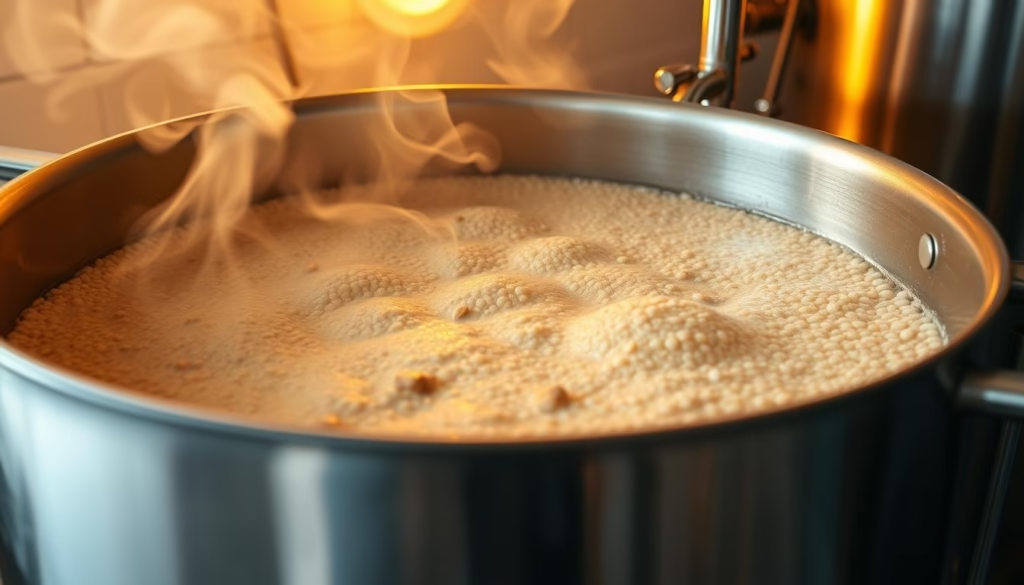
Mash thickness, pH targets, and rice hulls for flow
Keep mash pH in the 5.2–5.4 zone. That preserves enzyme activity and leaves a clean, rounded foundation for hops.
Add rice hulls when using lots of oats or wheat; high-protein grains can slow or stall runoff on some systems. This keeps the grains moving and prevents a stuck sparge.
154°F mash for less fermentable wort and plush mouthfeel
Target 154°F for 60 minutes to bias toward less fermentable sugars and a fuller finish. Stretch to 90 minutes for higher gravity or tighter efficiency.
- Stir gently during dough-in to avoid oxygen pickup and ensure even temperature.
- Pre-heat your tun and verify thermometer accuracy—small errors change attenuation.
- Manage runoff pace; a steady, slightly slow lauter helps clarity and efficiency with thick mashes.
- Document strike water, thermal losses, and exact steps so you can repeat results batch to batch.
“A stable mash—right thickness, pH, and temp—makes the rest of the brew day easier and the beer noticeably juicier.”
Boil Schedule and Whirlpool Execution
A focused boil and a precise whirlpool are where aroma and clarity get decided. Run a 60-minute boil to sanitize the wort and drive off DMS precursors. This length protects color and keeps your water and grain profile predictable.
At about 45 minutes, drop the immersion chiller in to sanitize. Add yeast nutrient and a dash of whirlfloc—these set up a cleaner kettle while still aiming for a hazy style.
Sanitation, DMS control, and late additions
Minimize boil hops; reserve most oils for the hot-side and post-ferment stages. Keep the boil vigorous but controlled—60 minutes is enough for sanitation without extra harshness.
180°F whirlpool steep for 20 minutes
After flameout, chill to 180°F and add your single hot-side hop charge. Hold a gentle whirlpool for 20 minutes—this is the flavor engine of the recipe.
Maintain a soft vortex so hops stay suspended but oxygen pickup stays low. Then chill quickly to ~70°F and transfer to the fermentor.
- Track time and temp—small deviations alter bitterness and aroma.
- Keep sanitation strict: clean surfaces, fresh sanitizer, tight lines.
- Record hop varieties and weights for each whirlpool; your notes guide the next step toward the intended style.
Fermentation Management: From Pitch to Soft Crash
Good fermentation starts with the right cell count and a plan to keep yeast healthy. Pitch healthy yeast at a proper rate, oxygenate with pure O2 if you can, and always add yeast nutrients. These steps give a clean, expressive fermentation that shows off late hops without off-flavors.
Pitching, nutrients, and holding 68–70°F
Hold the fermentation temperature at 68–70°F for most of primary. That range encourages gentle esters and keeps fusels in check.
Typical primary lasts about seven days, but trust gravity readings rather than the calendar to decide when to move on. Keep the fermentor sealed—oxygen kills fresh hop aroma and shortens shelf life.
Soft crash to ~58°F to limit enzymatic hop creep
After active fermentation, perform a soft crash to ~58°F before dry hopping. Cooler temps slow enzymatic activity and reduce hop creep—the tendency for hops to release enzymes that drive FG lower.
“Dr. Charles Shellhammer’s work shows hop-derived enzymes can ferment extra sugars; cooler post-primary temps help limit that effect.”
- Pitch healthy yeast, oxygenate if possible, and dose nutrients for robust growth.
- Keep your fermentation temperature steady—document the profile for repeatability.
- Soft-crash before dry hop to protect the intended final gravity and juicy profile.
- Harvest yeast after the soft crash and before dry hopping to preserve slurry quality.
Use the science in the book-level research as a guide: small controls—oxygen, nutrients, and temp—translate into a clearer, juicier New England IPA that matches your target profile.
Zero-Oxygen Dry Hopping Techniques
A careful, sealed dry hop routine preserves volatile oils and keeps your beer tasting fresh longer. Keep the cold side methodical: the goal is to add aroma without letting oxygen in.
Closed transfers, CO2 purging, and hop dropper workflow
Use a hop dropper attached to a 3″ tri-clamp butterfly valve with a sight glass so you can add hops after a full CO2 purge. This lets you avoid cracking the lid and exposing beer to air.
Step sequence: close the valve, install the hop dropper, load hops, purge the chamber with CO2, open to drop, then re-seal and purge lines again. Follow the same pattern for lines, headspace, and the hop chamber.
Dry hop contact time and dumping hops in a conical
Hold contact about 3–4 days at ~58°F. That window pulls aromatics while reducing grassy notes.
- Keep oxygen out by purging fermentor headspace, lines, and the hop chamber before additions.
- A hop dropper with a butterfly valve and sight glass lets you add hops cold-side without cracking the lid.
- Conical fermentors let you dump spent hops before transfer, cutting debris and yeast carryover.
- Watch for suck-back during crash steps—use CO2 or sanitized liquid traps to protect the beer.
“Mechanical O2 exclusion is your best defense; yeast can scavenge a bit, but don’t rely on it.”
Record hop form, charge size, and contact days so you can repeat the result. Small choices on the cold side protect all the work you did on the hot side and in mash water control.
Kegging Without Oxidation
A clean, sealed transfer from fermentor to keg keeps aroma and freshness intact. This step protects the hours you put into mash, hops, and fermentation. Follow a clear routine and you’ll keep volatile oils and hop character bright.
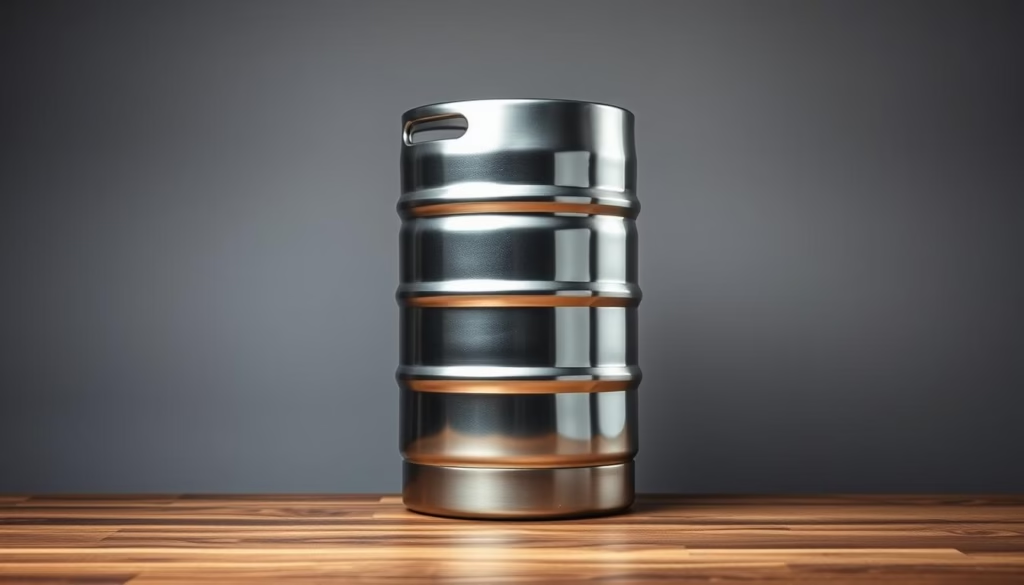
Purging kegs and closed-loop transfers
Sanitize a corny keg with Star San, then push that sanitizer out with CO2 through the liquid post. Doing so purges the keg and the transfer line. It clears oxygen from the entire liquid path before the beer moves.
Keep the transfer closed-loop—fermentor to keg under CO2. This avoids splashing and air exposure on the cold side. Vent and pressurize in short cycles to confirm the keg is fully purged before you open the valve.
Inline filtration to keep hop debris out
Use a Bouncer inline filter to catch hop debris and prevent clogged dip tubes. Clear lines mean fewer headaches and better pours later. Replace worn O-rings and lube posts to avoid leaks that can pull in air during or after transfer.
- Chill the keg before transfer; colder stainless absorbs less oxygen.
- Label kegs with the beer’s water profile and batch notes so you can link process to pour quality.
- Store finished beer cold and stable—oxygen, light, and heat are the true enemies of hop freshness.
“Treat packaging like part of the recipe—not an afterthought.”
Featured Recipe: A Damn-Near-Perfect Hazy IPA
Here’s a compact, repeatable New England IPA formula that leans on a soft water profile and late-hop drama.
Water: Build to a 2:1 chloride-to-sulfate target (Ca 100, Mg 18, Na 16, Cl 186, SO4 93) so the palate feels plush and supports saturated hop flavor.
Grain bill: 65% base (pale malt + pilsner), 30% flaked oats and wheat, 5% dextrin malt. This mix gives stable haze, silk, and enough body for juicy aromatics to sit on top.
Hops & whirlpool: Hold a whirlpool at ~180°F for 20 minutes with about 6 oz total of a Galaxy/Nelson blend. That hot-side charge pulls vivid citrus and white-grape notes without harsh bitterness.
Yeast & fermentation: Pitch Wyeast 1318 or Imperial A38 and hold 68–70°F. Expect primary to wrap in about a week. Soft crash to ~58°F to limit hop creep before you dry hop.
- Dry hop ~6 oz cold-side for ~3 days, then dump hops (conical users) for a cleaner transfer.
- Keep oxygen out—purge headspace, lines, and the keg before a closed transfer through an inline filter if needed.
- Minutes in the whirlpool and days of contact in dry hop are your highest-leverage variables—tweak those, not the core grist or water.
“Treat this template as a platform—swap varietals or hop lots seasonally, but keep water, malt, and fermentation consistent.”
Classic Craft Option: Marshall Schott-Inspired Homebrew
If you want a classic, malt-forward pint, this Marshall Schott–inspired approach centers on a pale malt base with layered character malts.
Grain bill highlights
Grain bill: Pale Malt 8 lb 8.2 oz; Crystal 10 11.7 oz; Vienna 11.7 oz; Victory 8.5 oz; Crystal 60 5.3 oz.
Mash and boil plan
Single infusion at 152°F for 60 minutes, no-sparge. This mash keeps fermentability moderate and the finish crisp.
Boil additions: Magnum 0.6 oz @60, Perle 0.5 oz @25, Fuggle 0.5 oz @10 and 0.5 oz @2. Add whirlfloc at 15 minutes if you want a cleaner kettle break.
Fermentation and finishing
Pitch White Labs San Diego Super Yeast. Hold at 66°F for 4 days, then let the fermentor rise to room temp for another 5 days to finish.
Cold crash and fine with gelatin for clarity. This yields a bright, nuanced beer that contrasts nicely with hazy styles.
“A steady yeast and measured minutes in the kettle let malt and kettle hops do the talking.”
- This balanced pale ale leans classic—pale malt with Vienna and light crystal to add depth.
- Mash at 152°F for 60 minutes; skipping sparge simplifies the day.
- Track hop timing closely—minutes in the boil shape bitterness and flavor.
Style Spins: Pale Ale, IPA, and Lager-Inspired Variations
A consistent mash and transfer routine makes it easy to nudge a base beer toward pale ale, IPA, or lager territory. Keep the same grain bill mix and process backbone, then let water, hops, and yeast define the version.
Pale ale tweaks
For a crisp pale ale, reduce hop load slightly and spotlight a cleaner malt focus. Use citrus-forward hop varieties to keep things bright.
West Coast IPA adjustments
Raise sulfate in the water profile for a snappier perceived bitterness. Add classic kettle hop additions early to lock in that piney, resinous character.
Lager-inspired versions
Borrow a neutral yeast and ferment cooler for snap and clarity. Keep late hops minimal so malt and crispness show through.
- Keep the grain bill simple—let water and hop moves create the style shift.
- Match hop varieties to intent: citrus for pale ale, pine for West Coast, restraint for lager.
- Track profile shifts: sulfate up for West Coast, chloride up for juicy variants, neutral for lager clarity.
- Maintain oxygen control, whirlpool timing, and clean transfers—those steps preserve the differences you want.
| Style | Key tweak | Result |
|---|---|---|
| Pale ale | Lower hop load, cleaner malt | Refreshing, balanced |
| West Coast IPA | Sulfate up, early kettle hops | Snappy bitterness, resinous hop |
| Lager-inspired | Neutral yeast, cool ferment | Crisp, clear, low ester |
Brew Day Workflow and Timing
A well-paced brew day keeps stress low and flavor high. Start by heating strike and sparge water together so you can treat them uniformly. Add brewing salts once water exceeds 100°F so they dissolve fully.
Confirm pH with lactic acid before dough-in. That small check protects enzyme function and final mouthfeel.
Strike, mash, boil, whirlpool, chill: minutes that matter
Track minutes at each step. At 45 minutes into the boil, sanitize the chiller and add yeast nutrient and whirlfloc.
After flameout, set a controlled whirlpool at 180°F for 20 minutes. That window pulls aroma without tannin extraction.
Chill promptly to ~70°F and pitch healthy yeast right away. Quick chill preserves volatile hop oils and gives yeast a clean wort to work on.
Packaging day checklist for brewing success
Before packaging day, prepare kegs and lines: sanitize, purge with CO2, and verify seals. Use a closed transfer into a purged keg to avoid oxygen pickup.
If you dry hopped heavily, route beer through an inline filter to catch debris and protect downstream hardware. Soft crash the fermentor before dry hop to limit hop creep and keep gravity stable.
- Organize your brew day into clear steps—heat and treat water, mash, boil, whirlpool, chill, ferment, then package.
- Add salts once water is warm; confirm pH before mash in.
- Track minutes for sanitation, whirlpool, and chill—small timing errors change flavor and clarity.
- Keep a checklist for ingredients and gear; it saves time when the timer is running.
- Document actual times and temperatures—these notes are gold for repeatability.
| Step | Key action | Target minutes / temp |
|---|---|---|
| Heat & treat water | Add salts >100°F, adjust pH | Until salts dissolve; confirm pH before mash |
| Mash | Hold mash temp; monitor pH | 60 min typical (follow mash plan) |
| Boil | Sanitize chiller; add nutrient & whirlfloc @45 | 60 min boil; whirlpool after flameout |
| Whirlpool & chill | 180°F whirlpool, then rapid chill to pitch temp | 20 min whirlpool; chill to ~70°F |
| Packaging | Soft crash, closed transfer to purged keg, inline filter | Soft crash ~58°F; closed transfer under CO2 |
“A calm, methodical brew day pays off in the glass—every minute you manage well builds better beer.”
Choosing Your Next Beer Style: No Single Favorite Needed
There isn’t one style that rules my fridge; variety keeps me curious and pushes technique forward.
You don’t need a single favorite beer style. Build a process you trust at home, then rotate through ipas, lager, stouts, brown ales, and porters to learn what each teaches about grain, hops, yeast, and water.
Rotate intentionally—pick a new style every few months. That forces you to remaster mash temps, yeast handling, and hop timing. Small, single-variable tweaks build real intuition.
- Keep notes by style so your next choice is based on results, not guesswork.
- Use split batches to compare two approaches side-by-side and speed learning over years.
- Share samples and gather feedback—friends spot details you might miss.
“Variety keeps your brew calendar exciting and your fridge full of options to match the moment.”
| Why rotate | What you learn | Practical tip |
|---|---|---|
| Explore balance | Grain vs hop dominance | Change one variable at a time |
| Seasonal fit | Light beers for warm months, rich for cold | Plan batches ahead |
| Skill growth | Oxygen control, temp targets, water tweaks | Log water adjustments and yeast strains |
Conclusion
A reliable pint starts with repeatable choices: set your water, tighten mash and whirlpool timing, pick an English ale yeast profile, then guard the cold side with sealed, oxygen-free transfers.
Use the featured recipe as your baseline—light base, 2:1 Cl:SO4 water, 180°F whirlpool for 20 minutes, ferment at 68–70°F, soft crash to ~58°F, then dry hop and keg without oxygen. The Marshall Schott route gives you a kettle-forward contrast that teaches timing and clarity.
Log temps, grams, and days. Let the book The New IPA guide hop science while you test small changes. Brew often, compare results, and share samples—the feedback sharpens your palate and your process. Ready for the next batch? Set your water, prep yeast, and brew with intent—your pint will show the difference.
FAQ
How do I balance a grain bill for a hazy New England IPA?
Start with a neutral base like pale malt or a pale ale malt, then add small amounts of pilsner for brightness. Use flaked oats and wheat for body and haze, and include 5–8% dextrin malt to boost residual sweetness and fullness. Keep specialty malts low to preserve the pale color and soft mouthfeel.
Which hops work best for juicy, tropical hop character?
Go with modern aromatic varieties such as Citra, Mosaic, Galaxy, and Nelson Sauvin. Use them at late kettle, whirlpool, and during dry hop so you highlight aroma and flavor without adding harsh bitterness. Low-IHU bittering hops like Magnum can be used early if needed to set structure.
When should I add whirlpool vs. dry hop additions?
Add high-aroma hops at whirlpool (around 170–180°F steep for 15–20 minutes) to extract soluble oils without harshness. Reserve large, aromatic charges for dry hopping after active fermentation subsides to capture volatile aromatics and encourage biotransformation if you’re using a fruity yeast.
Which yeast strains give the soft, fruity profile of NEIPA?
English and English-derived ale yeasts are common—strains like Wyeast 1318 and some Lallemand A38-style blends produce estery, tropical character. They ferment relatively warm (around 66–70°F) to enhance fruitiness and mouth-coating esters.
What fermentation temperature should I use for a juicy IPA?
Aim for roughly 66–70°F during active fermentation to promote fruity esters without excessive fusel alcohols. After fermentation, a soft crash to about 55–60°F for a couple days helps settle particulates and reduce hop creep.
How should I adjust water chemistry for a soft, rounded IPA?
Target a chloride-to-sulfate ratio near 2:1 to emphasize malt softness and hop fullness. Add calcium chloride for chloride, gypsum sparingly for sulfate, and adjust with Epsom or table salt in small amounts if needed. Start with RO or distilled water for a clean base.
What mash schedule gives the plush body NEIPAs need?
A single infusion mash around 152–154°F using a moderate thickness (about 1.25–1.5 qts/lb) produces a less fermentable wort and a higher final gravity, yielding a round, soft mouthfeel. Monitor pH to keep it near 5.2 and add rice hulls if lautering gets stuck.
How long should I whirlpool at 180°F for hop character?
A 15–20 minute whirlpool at roughly 170–180°F extracts aromatic oils while limiting tannin pickup. Keep the wort covered and avoid vigorous agitation to minimize oxidation and hot-side hop absorption.
What steps minimize oxygen pickup during dry hopping and kegging?
Use closed transfers, purge vessels with CO2, and add hops via a hop dropper or in a sealed hop bag inside a sealed vessel. When kegging, purge the keg and lines with CO2 and transfer under pressure to avoid introducing oxygen.
How do I avoid excessive bitterness while still getting juicy flavor?
Keep early-boil bittering additions low and rely on late kettle, whirlpool, and dry hop additions for flavor and aroma. Use hop schedules that emphasize late use; sample IBUs with brewing software and aim for modest levels appropriate to the style.
What pitching rate and nutrients are recommended for IPA yeast health?
Pitch a healthy amount of yeast—typically a 1.0–1.5 million cells/mL per °P for ales—or use a properly sized starter. Add yeast nutrients as recommended, especially with high-gravity worts, to ensure a clean, vigorous fermentation and reduce off-flavors.
How long should I dry hop, and can hop creep be an issue?
Dry hop contact times of 3–5 days are common for active aroma pickup; extended contact can extract vegetal notes. Hop creep (continued fermentation from hop enzymes) can occur—limit by dry hopping after most attenuation, chilling slightly, and monitoring gravity.
Is it better to start with RO water for consistent brewing?
Yes—RO or distilled water gives you a neutral starting point. From there you can add precise amounts of brewing salts (CaCl2, gypsum, Epsom) to dial in chloride, sulfate, and calcium targets for the style you want to brew.
How does a soft crash help clarity and stability?
Lowering temperature gently after fermentation helps flocculate yeast and precipitate hop and protein haze, improving clarity. A soft crash to around 55–60°F for 24–72 hours reduces haze and stabilizes the beer before packaging.
Can I adapt a NEIPA recipe to a keg or bottle conditioning?
Kegging under CO2 is preferable to limit oxygen and preserve hop aroma. If bottle conditioning, be conservative with priming sugar and accept that hop character can change over time—package as fresh as possible and store cold to retain aroma.
What are quick tweaks to turn a pale ale into a hazy IPA?
Increase late-hop and dry-hop charges with juicy varieties, add 5–10% flaked oats or wheat for haze and mouthfeel, bump mash temp slightly to 152–154°F, and use a fruity English ale yeast. Adjust water to a higher chloride ratio for softer perception.
How do I manage DMS and sanitation during boil and whirlpool?
Ensure a vigorous, rolling boil for the required time to drive off DMS precursors. Chill wort quickly after whirlpool and avoid prolonged exposure at warm temperatures. Keep equipment sanitized, and limit hop and trub transfer into fermenters when possible.
Section label
We put our employees first
Lorem ipsum dolor sit amet, consectetur adipiscing elit. Etiam non nisl in velit dignissim mollis a rhoncus dolor. Vivamus egestas condimentum erat, in iaculis nulla blandit ut.Lorem ipsum dolor sit amet, consectetur adipiscing elit. Fusce imperdiet sed neque vitae pharetra. Duis vitae dolor dictum, interdum metus quis, posuere nisl. Aenean convallis odio a odio lobortis fringilla. Proin consequat id quam et convallis. Praesent dui sem, rhoncus ut ex ut, bibendum euismod justo.





One Comment