Table of Contents
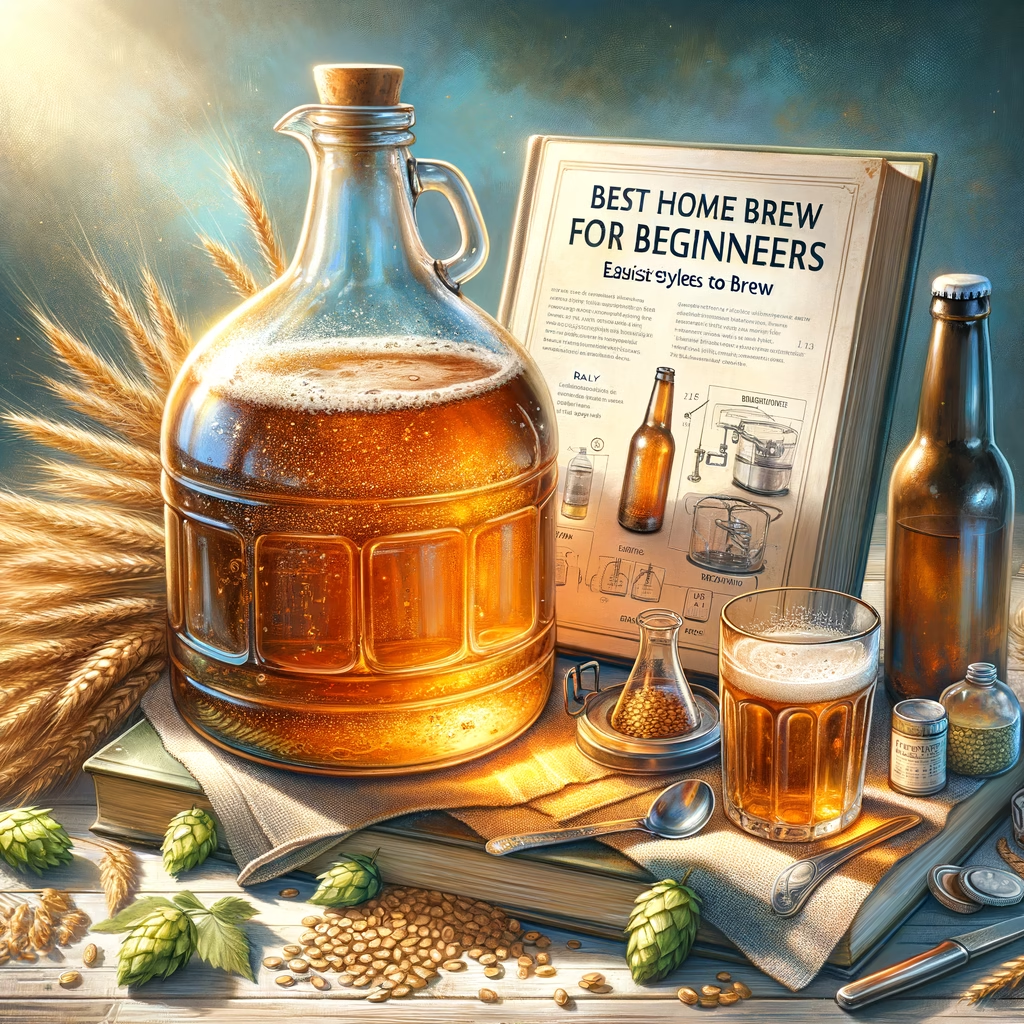
You might remember the first time a new hobby felt equal parts thrilling and oddly possible. Maybe it began with a simple recipe or a movie night that sparked curiosity. I’ve stood where you are—unsure, excited, and ready to learn how to make beer
at home.
This guide pares down the jumble into one clear path: pick a beginner-friendly starter kit, follow a simple extract brew flow, and keep sanitation strict. If you can follow boxed mac and cheese, you can follow an extract recipe.
Starter kits bundle essentials—kettle, fermenter with airlock, sanitizer, siphon, spoon, and an ingredient kit—so you don’t overbuy. Clean tools and steady temperature drive better fermentation and clearer results.
Read on and you’ll get started with confidence. We’ll translate brew-speak, set realistic timelines, and point out upgrades that improve consistency without breaking the bank.
Key Takeaways
- Begin with a packaged starter kit to simplify setup.
- Sanitation and temperature control are the biggest factors in good results.
- Extract brews shorten learning curves—steep, boil, chill, ferment, bottle.
- Plan an afternoon for brew day and about two weeks for conditioning.
- Upgrade tools like a wort chiller or hydrometer once you want finer control.
Start here: What to expect when brewing beer at home
Expect a single active brew day and then a stretch of quiet fermentation while the yeast does most of the work.
Plan one full day for heating, boiling, and chilling wort. After that, your active work drops off. Most of the next two weeks are observation and light maintenance.
Set the fermenter in a dark, cool room around 68°F for ales. That steady environment keeps yeast happy and reduces off-flavors.
Air lock bubbling usually appears within 24 hours and slows after 4–6 days. Wait until fermenting is stable for 48 hours before bottling; gravity readings give the final say.
- Brewing is repeatable: heat, boil, chill, ferment, and package — the same core steps every batch.
- Your active time concentrates on brew day; then the batch rests for several days and conditions for a couple of weeks.
- Have a clean place ready for an ice bath and for staging bottles later.
| Phase | Typical length | Visible signs | What you do |
|---|---|---|---|
| Brew day | One day | Rolling boil, strong aroma | Steep, boil, cool, transfer |
| Primary fermentation | 4–10 days | Air lock bubbling, krausen | Monitor temp in a dark room |
| Conditioning & bottling | ~2 weeks | Clearer liquid, stable gravity | Prime, bottle, store at room temp |
Choose the right starter kit to get started
Match your goals with a kit: quick extract systems for fast wins or all-grain setups for deeper control.
Types of kits:
Extract, all-grain, and micro-brewery style options
Extract kits are the simplest path. Malt extract removes the need for mashing, so you can focus on clean technique and sanitation.
All-grain systems mimic a small brewery and give you precise control over flavor and body. They add steps and require more equipment and time.
Micro-brewery style kits bundle large kettles and turnkey equipment for serious hobbyists. Talk with a local supplier if you want a shop-fit match for your goals.
What a beginner-friendly kit should include
Look for a complete set: kettle, fermenter with air lock, funnel, sanitizer (PBW or Star San), auto-siphon, and a stir spoon.
A forgiving recipe—pale ale, amber, or stout—helps you learn without harsh penalties for small errors.
Picking the right size for your first 1–5 gallon batch
Decide on batch volume based on where you’ll brew. Stove-top extract boils work well for 1–3 gallons. A full 5-gallon batch often needs a stronger burner and a larger kettle.
Check fermenter capacity and allow headspace for krausen. If budget allows, an auto-siphon and adhesive thermometer save time and improve repeatability.
| Kit type | Best for | Includes | Typical batch size |
|---|---|---|---|
| Extract starter | First-timers, small kitchens | Kettle, fermenter, sanitizer, recipe extract | 1–3 gallons |
| All-grain kit | Flavor control, advanced learning | Large kettle, mash tun, fermenter, full equipment | 3–5 gallons |
| Micro-brewery style | Frequent brewers, upgrade path | Commercial-style kettle, burners, full gear | 5+ gallons |
Homebrewing equipment and ingredients you’ll need
Good results come from a few reliable choices, not an overflowing bench.
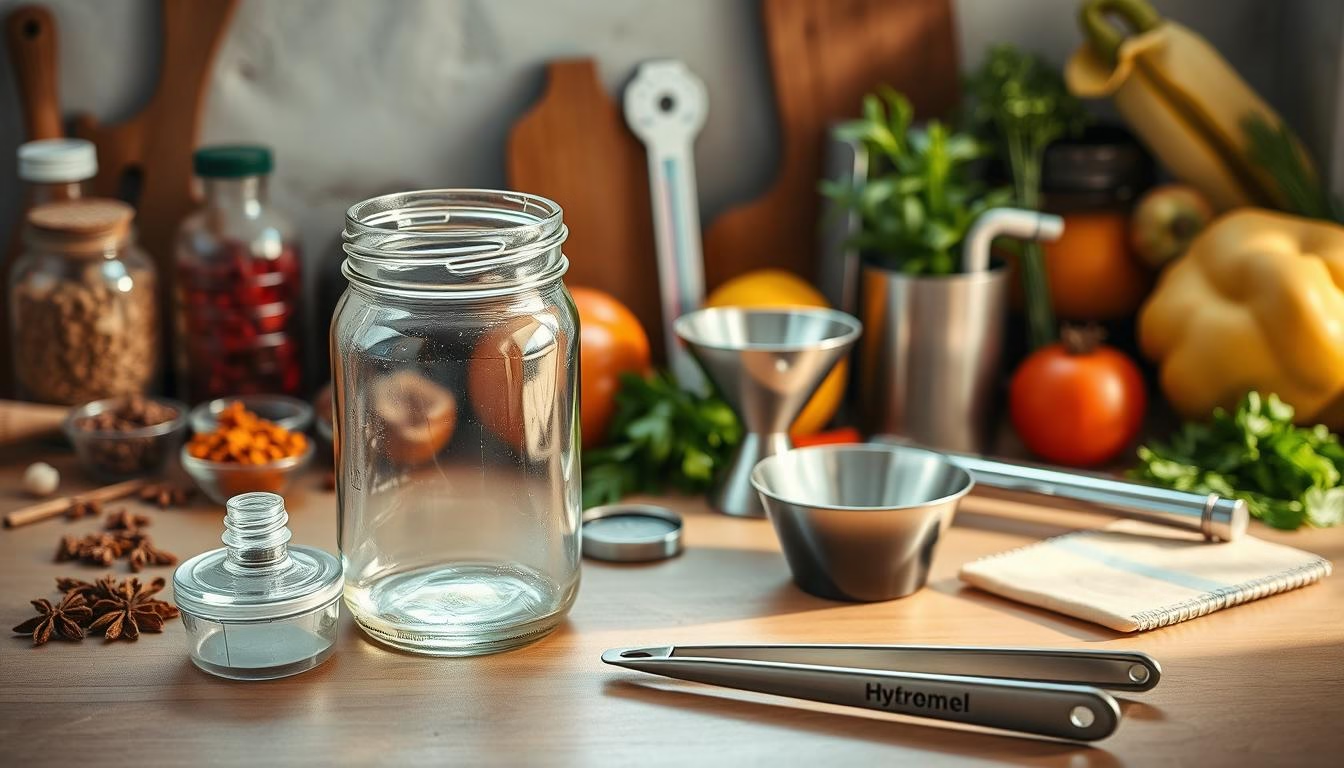
Core gear includes a sturdy cooking pot (16 qt+), a sealed fermenter—bucket or carboy—with an air lock, and a siphon for clean transfers.
Don’t skip a hydrometer; it’s the truth meter for gravity readings. Add a long stirring spoon and sanitizer like Star San or PBW for safe handling.
Optional tools that improve results
- Wort chiller for rapid cooling.
- Clip-on thermometer or adhesive strip for steady fermentation near 68°F.
- Wide-mouth funnel and a grain bag for clean steeping.
Key ingredients and volumes
Keep ingredients simple: malt extract or grain, hops, brewing yeast, and priming sugar. Use clean water—many brewers boil ~2.5 gallons, then top up in the fermenter to reach 5 gallons.
Practical tip: Boil priming sugar in about 16 oz of water before bottling. Organize gear in brew-day order and the process feels much easier.
Sanitize, sanitize, sanitize for clean results
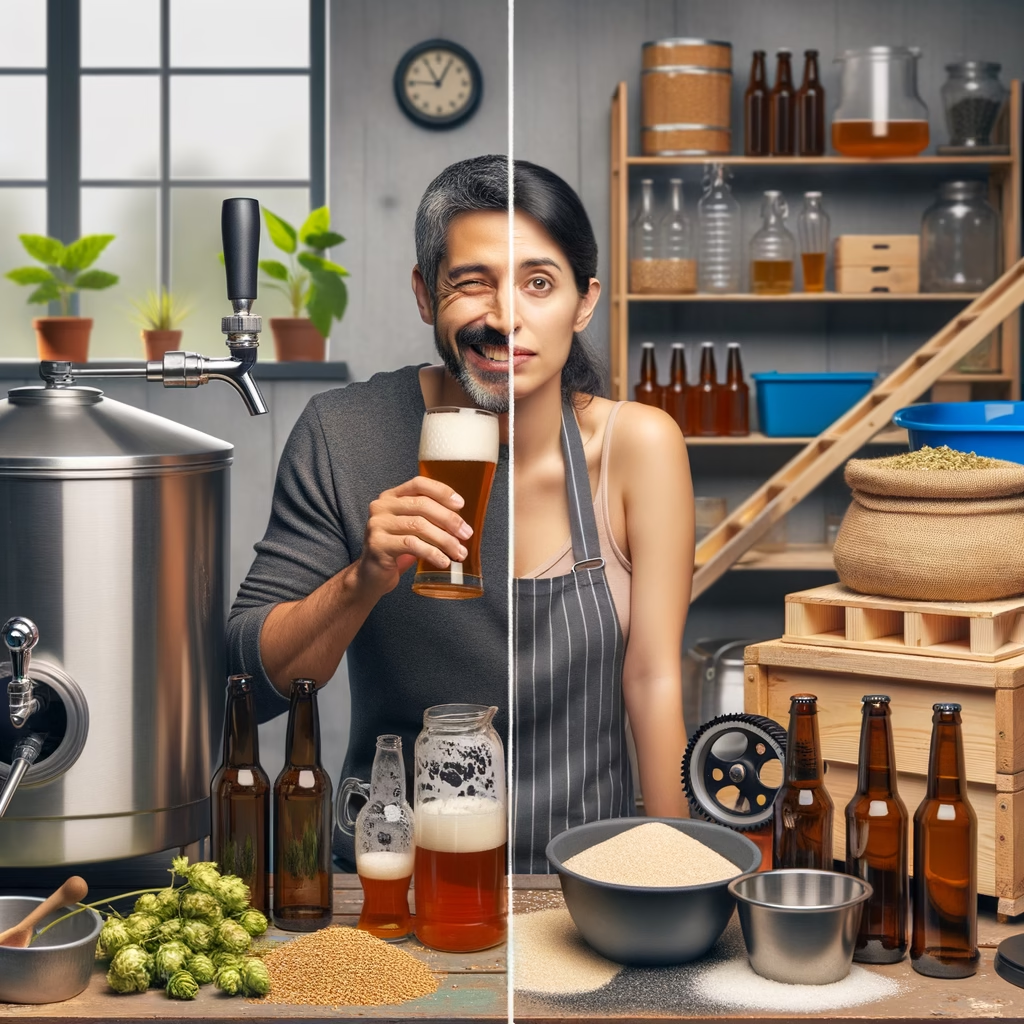
Good sanitation is the single step that protects flavor and keeps batches drinkable.
Clean first, then sanitize. Wash gear with warm, lightly soapy water and rinse well. Use PBW or One Step to remove organic soils before any sanitizer.
For final sanitation, use Star San (no-rinse acid sanitizer) or a bleach solution at 1 tablespoon per gallon of water. Mix fresh on brew day and keep a spray bottle handy.
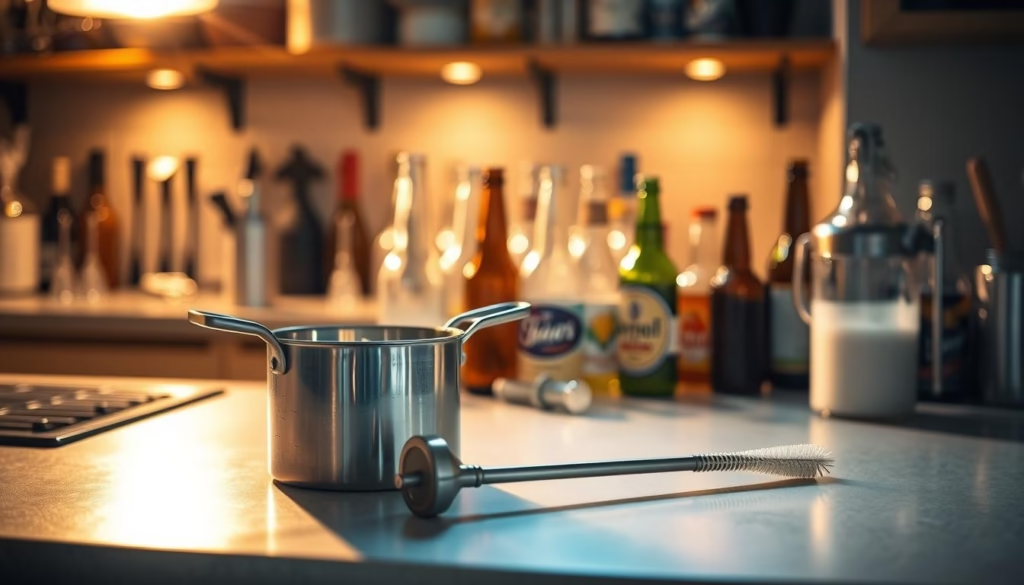
- Treat sanitation as part of the process—it’s the easiest way to protect flavor and drive better results.
- Sanitize anything that touches cooled wort or finished beer: fermenter (bucket or carboy), air lock, siphon, tubing, hydrometer, funnel, thermometer, bottles, and caps.
- Re-wet tools if they are set down or touched. Star San works fast; a clear foam is normal.
- Clean as you go—wash the kettle while the wort chills and prep sanitized gear in the last 10 minutes of the boil.
- Separate hot-side gear (pre-boil) from cold-side gear (post-boil) to avoid cross-contamination.
Quick reference
| Cleaner / Sanitizer | Role | Notes |
|---|---|---|
| PBW | Cleaner | Removes organic soils; rinse before sanitizing |
| Star San | Sanitizer | No-rinse; leaves harmless foam when mixed correctly |
| Bleach (1 Tbsp/gal) | Sanitizer | Rinse well with clean water after use |
| One Step | Cleaner + sanitizer | Simple option for beginners; follow label directions |
Store cleaned equipment dry. Residual moisture can hide microbes that ruin a future batch. Keep this routine and your gear will help deliver consistent, drinkable beer.
How to make beer at home: brew day steps
Brew day focuses on a few controlled moves: steep, add extract, follow a hop rhythm, and chill fast. Keep a timer and a clean workflow and the day feels straightforward.
Steep grains in the bag: time and temperature targets
Heat strike water and steep crushed specialty grains in a mesh bag like making tea. Aim for about 20 minutes and a target temperature near 170°F. Lift the bag free—do not squeeze the bag to avoid tannin extraction.
Add malt extract and bring to a rolling boil
Remove the pot from heat before stirring in malt extract. Dissolve the extract fully to prevent scorching on the bottom. Return the pot to a rolling boil only after the extract is mixed in.
Hops schedule: bittering vs. flavoring hops and minutes in the boil
Follow your hop schedule—bittering hops usually go in with ~60 minutes left, while flavor and aroma hops join in the final 5–15 minutes. Use a timer for key minutes and set alerts for additions.
Avoid boil-overs and scorching the bottom of the pot
Watch for sudden foaming when hops hit hot wort. Keep headspace in the pot and reduce heat slightly if foam rises. A spray bottle of water and a steady stir prevent messy boil-overs and caramelization.
Chill the wort fast: ice bath vs. wort chiller
Chill quickly to improve cold break and cut infection risk. For partial-volume boils, an ice bath in a sink or tub works well. A wort chiller speeds cooling and is worth the investment if you plan many batches.
- Quick checklist: steep ~20 minutes, add extract off heat, boil with hop timings, manage foam, chill fast, check temperature before pitching.
Ferment like a pro: transfer, pitch yeast, and monitor
Get the wort into a clean fermenter with care—this step sets the batch up for success.
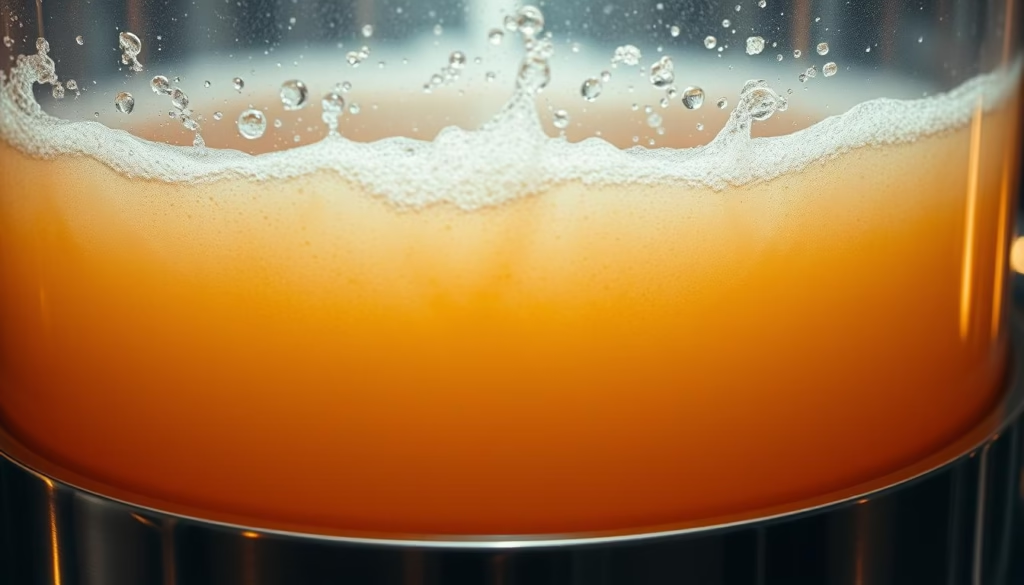
Transfer, top up, and aerate before pitching
Move cooled wort into a sanitized bucket or carboy. If you did a partial boil, add clean water until you hit your target volume.
Aerate well: splash or shake the vessel to dissolve oxygen. Yeast need that oxygen early so they can multiply and begin fermenting strongly.
Pitch yeast, seal the fermenter, and control temperature
Sanitize the yeast packet and scissors, then sprinkle dry yeast for simplicity. Fit an air lock and label the fermenter.
Keep ales near room-like 68°F in a dark, steady place. Stable temperature reduces off-flavors and keeps fermentation on track.
Use a hydrometer for gravity readings and a realistic timeline
Expect visible activity within 24 hours and slowing after 4–6 days. Take one hydrometer reading at pitch (OG) and again near the end.
“Let the numbers, not the bubbles, guide your timeline.”
When gravity readings are stable on consecutive days—many beginners wait about two weeks—you’re ready to package your beer.
Bottle, prime, and condition your beer
Bottling day is the final careful step where neat technique turns fermenting beer into drinkable bottles.
Sanitize everything: bottles, bottle filler, caps, bottling bucket, and hoses. Clean gear first, then apply a no-rinse sanitizer or fresh bleach solution and rinse if required.
Priming sugar basics and preparing bottles or two-liter pop bottles
Boil priming sugar in about 16 oz of water, cool, and add this solution to the bottling bucket before siphoning in beer. This spreads sugar evenly so yeast can carbonate each bottle.
If you use two-liter pop bottles, add two level teaspoons of sugar per bottle. Measure carefully — too much sugar risks gushers; too little leaves flat beers.
Minimize sediment: siphoning technique and clear beer
Siphon gently and leave sediment behind. Tape a thin plastic straw so it extends ~1″ past the siphon tip; that helps avoid pulling from the bottom.
Fill with a spring-tip filler. Pulling the filler out leaves the ideal headspace for carbonation and clearer pours later.
Carbonate at room temperature, then refrigerate and enjoy
Cap firmly and store bottles at room temperature for roughly two weeks. Yeast will consume the priming sugar and create CO2.
“Patience at this stage rewards you with clearer, properly carbonated bottles.”
| Step | Action | Why it matters |
|---|---|---|
| Sanitize | Sanitize bottles, bucket, filler, caps | Prevents infections and off-flavors |
| Prime | Boil ~16 oz water with sugar; mix in bucket | Even carbonation across bottles |
| Siphon & fill | Keep pickup above sediment; use bottling wand | Reduces sediment in final pours |
| Condition | Store at room temp ~two weeks, then chill | Yeast produces CO2; cold keeps carbonation stable |
- Label caps with date and style so you track aging and compare batches.
- Use sanitized two-liter bottles for fewer containers and faster cleanup if desired.
- After conditioning, refrigerate for best flavor and shelf stability.
Conclusion
A clear, repeatable routine turns a chaotic brew day into something you can trust. ,
Follow the extract path: steep grains, add malt extract off heat, return for a timed boil, then chill the wort fast. Transfer to a sanitized bucket or carboy, top with clean water, aerate, and pitch yeast.
Use a hydrometer for an original and final reading so fermentation finishes on the numbers. Sanitize anything that touches cooled wort with PBW and Star San or a bleach mix (1 tbsp per gallon).
Prime in boiled water or dose two-liter bottles, siphon gently to avoid bottom sediment, cap, and condition at room temp for about two weeks. A good kit supplies most essentials and helps you focus on temperature, timing, and patience. Enjoy the learning—consistent brewing pays off.
FAQ
What should I expect when brewing beer at home for the first time?
Expect a hands-on weekend project that mixes simple chemistry with kitchen skills. You’ll heat water, steep grains or add extract, boil with hops, cool the wort, pitch yeast, and wait while fermentation happens—usually vigorous in the first few days, then slower. Plan for about two weeks before bottling and another one to two weeks for conditioning. Temperature control, sanitation, and patience make the biggest difference in results.
Which starter kit type is best for a beginner: extract or all-grain?
An extract kit is the friendlier route for your first 1–5 gallon batch—less equipment, shorter brew day, fewer variables. All-grain delivers more control and flavor but needs more gear and time. If you want something in-between, look for a kit that uses steeping grains plus extract; it teaches mashing concepts without a full mash tun setup.
What must a beginner-friendly kit include?
A good starter set should have a fermenter (bucket or carboy) with an airlock, a basic kettle large enough for your batch, a siphon, a hydrometer, bottles and caps, a bottle capper, and clear instructions. Many kits also bundle malt extract, hops, and yeast—useful for a complete first batch.
How do I pick the right kit size for my first batch?
Choose based on space and drinking habits. A 1–2 gallon kit is compact and low-risk. A 5 gallon kit is standard for most hobbyists—yields enough for sharing and regular brewing routines. Consider pot size: a 5 gallon batch typically needs a 7–8 gallon kettle for a safe boil.
What core equipment do I need beyond the starter kit?
Essentials include a clean kettle, a fermenter or glass carboy, an airlock, a siphon, and a hydrometer for gravity readings. A digital thermometer, funnel, and sturdy grain bag (for extract-plus-grain recipes) are also very helpful for consistent results.
Which optional tools are worth the extra cost?
A wort chiller radically shortens cool-down time and reduces infection risk. A quality thermometer and a magnetic or digital hydrometer improve precision. A bottling bucket and picnic-style tap speed up bottling and minimize sediment transfer.
What are the key ingredients I should understand?
Malt (or malt extract) provides fermentable sugars and flavor, hops add bitterness, aroma, and preservation, yeast ferments sugars into alcohol and flavor compounds, priming sugar carbonates the beer in bottles, and water is the main ingredient—its quality affects taste. Learn basic hop timing and yeast strains for the style you want.
What volumes and temperature ranges matter during brewing and fermentation?
Monitor volumes in gallons—most home batches are 1–5 gallons. Boil hard in the kettle at a full rolling boil. Fermentation temperatures depend on yeast: ale strains typically prefer 64–72°F, lagers much cooler. Use a hydrometer to record original gravity (OG) and final gravity (FG) to estimate alcohol and fermentation progress.
How should I sanitize equipment, and which cleaners work best?
Sanitation is critical—clean first, then sanitize. PBW (Powdered Brewery Wash) or equivalent cleaners remove grime. For sanitizing, no-rinse acids like Star San are fast and reliable. Household bleach can be used at proper diluted ratios but requires thorough rinsing. Sanitize anything that touches wort after the boil and bottles before filling.
What parts require sanitizing and when during the process?
Sanitize fermenters, airlocks, siphon tubing, bottles, caps, and anything that contacts cooled wort. Do this immediately before use. Avoid touching sanitized surfaces with bare hands and keep the environment tidy during transfer and bottling.
What are the main steps for brew day?
On brew day: heat strike water, steep specialty grains if using, add malt extract and bring to a rolling boil, follow a hops schedule (bittering early, flavor/aroma late), avoid boil-overs and scorching, chill wort quickly, transfer to fermenter, top up to final volume, and cool to yeast pitching temperature before pitching yeast.
How long should I steep grains and at what temperatures?
Steep specialty grains in a grain bag at about 150–160°F for 20–30 minutes. That extracts color and flavor without converting starches. For full mashes (all-grain brewing), aim for 148–156°F depending on desired body.
What’s the typical hops schedule and boil timing?
Add bittering hops at the start of the boil for perceived bitterness (usually a 60-minute boil), flavor hops around 15–20 minutes left, and aroma hops in the last 5 minutes or at flameout. Dry hopping occurs later in fermentation for enhanced aroma without additional bitterness.
How do I avoid boil-overs and scorching the bottom of the kettle?
Watch the kettle closely as extract dissolves—stir frequently and reduce heat as boil approaches. Use a larger pot than the batch volume, keep an eye during hop additions, and stir or lift the pot briefly if foam builds. For scorching, keep the heat moderate and stir to prevent extract from sticking to the bottom.
Best methods to chill wort quickly?
A wort chiller (immersion or counterflow) is fastest and most reliable. If you don’t have one, an ice bath in a sink or cooler works—place the kettle in ice water and stir the wort or the water to speed cooling. Faster cooling reduces infection risk and helps clearer beer.
How should I transfer wort, pitch yeast, and aerate properly?
Transfer cooled wort into the fermenter, top up to batch volume with sanitized water if needed, and aerate by vigorous shaking or splashing to introduce oxygen for the yeast. Pitch the yeast at the recommended temperature and seal with an airlock to allow CO2 to escape while keeping contaminants out.
How do I use a hydrometer and what do OG and FG tell me?
Take an original gravity (OG) reading before fermentation. After fermentation, take a final gravity (FG). The difference estimates alcohol by volume. Record readings to confirm fermentation is complete—if FG stops changing over a few days, it’s likely done. Typical homebrew timelines often see primary activity in the first week and stabilization by two weeks.
What are priming sugar basics and how much do I use?
Priming sugar adds fermentable sugar to bottled beer so remaining yeast can produce CO2 and carbonate the beer. For a 5 gallon batch, common doses are 3/4 to 1 cup (about 4–5 oz by weight) of corn sugar (dextrose) depending on desired carbonation. Dissolve sugar in boiling water, cool, then gently mix into the bottling bucket before filling bottles.
How can I minimize sediment and get clearer beer?
Minimize sediment by siphoning carefully from above the trub and leaving the dead yeast behind. Cold crashing (chilling the beer near 35–40°F for a day or two) helps particles drop out. Using a secondary fermenter or fining agents can improve clarity but aren’t required for many styles.
What’s the right way to carbonate and condition bottles?
After bottling with priming sugar, store bottles at room temperature (about 65–75°F) for 1–2 weeks to carbonate. Cooler fermentation room temps slow conditioning. Once carbonated, chill for at least 24–48 hours before drinking—cold temps help flavors settle and reduce gushing when opened.
How much time will I need from brew day to drinking a finished bottle?
Expect roughly three to five weeks for a typical ale: one day brew, about two weeks primary fermentation, one to two weeks bottle conditioning. Lagers and higher-alcohol styles take longer. Aging can improve flavor, so consider tasting over time.
Where can I find reliable recipes and further learning?
Trusted resources include the American Homebrewers Association, Northern Brewer, MoreBeer, and homebrew forums. Recipe kits from established brands provide tested ingredient proportions and step-by-step guidance—helpful when you’re starting out.
How To Make Beer At Home – Up Next Find The Perfect Home Brew Starter Kit